Is Dog Dental Cleaning Under Anesthesia Safe?
Yes — but the answer deserves more than one word. General anesthesia carries a small, measurable risk. So does leaving your dog's mouth untreated. Understanding those two risks side by side is what allows you to make an informed decision, not just an emotional one. This guide gives you the real numbers, what pre-anesthetic bloodwork actually checks, the truth about "anesthesia-free" cleaning, and exactly when the risk calculation changes for senior dogs.
Disclosure: Some links in this article go to product reviews where we earn a small affiliate commission from Amazon. This never changes our recommendations. Full disclosure →
- ✅ Mortality risk: ~0.05% for healthy dogs
- ✅ Pre-anesthetic bloodwork catches most risks
- ✅ Continuous monitoring by trained technicians
- ✅ Endotracheal tube protects the airway
- ✅ IV fluids stabilise blood pressure
- ✅ Endorsed by AAHA, AVMA, and AVDC
- ⚠️ Dogs over age 10 need extra evaluation
- ⚠️ Pre-existing heart, kidney, or liver disease
- ⚠️ Obesity affects drug dosing and breathing
- ⚠️ Brachycephalic breeds (Bulldogs, Pugs)
- ⚠️ Longer procedures increase exposure time
- ⚠️ Skipping pre-anesthetic bloodwork
- Why anesthesia is necessary — not optional
- The real risk numbers — what the studies show
- What pre-anesthetic bloodwork actually checks
- Step-by-step: what happens during the cleaning
- Senior dogs and anesthesia — an honest look
- Why anesthesia-free dental cleaning is not safer
- 9 questions to ask your vet before the procedure
- What to expect during recovery
- Home dental care to reduce how often cleanings are needed
- Frequently asked questions
Why Anesthesia Is Necessary — Not Optional
Every credible veterinary organisation — the American Animal Hospital Association (AAHA), the American Veterinary Medical Association (AVMA), and the American Veterinary Dental College (AVDC) — requires general anesthesia for a proper dog dental cleaning. This is not a precaution driven by profit. It is driven by anatomy, safety, and what thorough dental care actually requires.
Up to 60% of each tooth is located below the gumline. That is where periodontal disease begins — in the sulcus, the small gap between the tooth and the gum where bacteria accumulate invisibly and silently. Without anesthesia, this area cannot be reached, evaluated, or treated. What an awake dog receives during an "anesthesia-free cleaning" is, at best, a cosmetic procedure that makes the visible teeth look cleaner while the actual disease continues to progress.
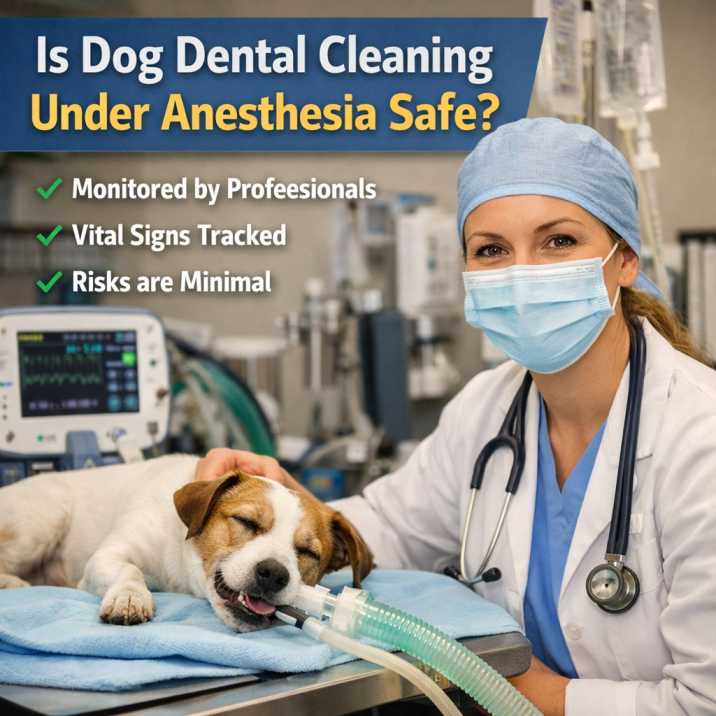
Anesthesia also serves a direct safety function. A conscious dog will inevitably move, flinch, or resist during the procedure. The instruments used for dental scaling are sharp. A sudden head movement with a sharp scaler in the mouth can cause lacerations, puncture wounds, or broken teeth. The endotracheal tube placed after induction also prevents water, debris, and bacteria from being inhaled into the lungs — a risk that does not exist when an animal is fully sedated and intubated.
The Real Risk Numbers — What the Studies Show
Fear of anesthesia is the number-one reason dog owners delay or refuse professional dental care. That fear is understandable, but it is rarely proportionate to the actual statistical risk. Here is what peer-reviewed research and clinical data show.
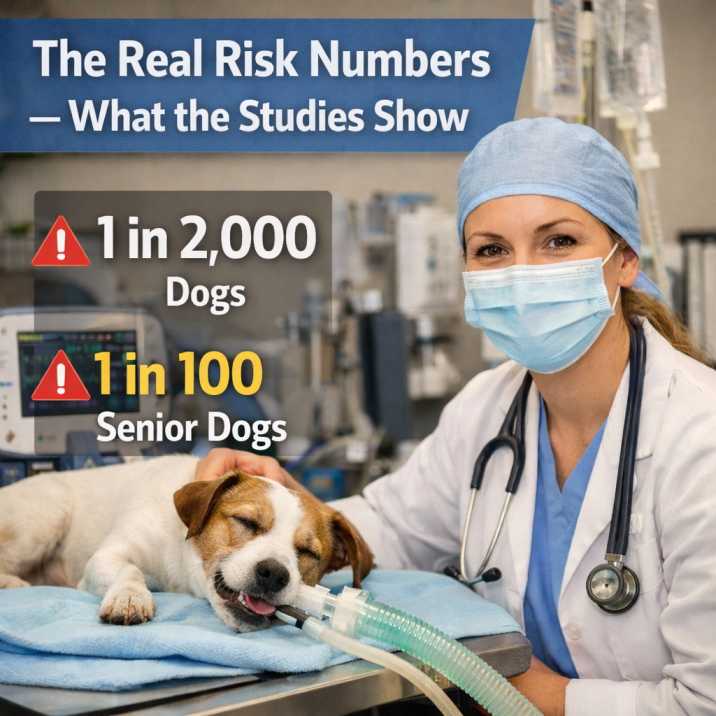
To contextualise these figures: the lifetime risk of a US dog dying from heart disease is approximately 10%. The risk of significant periodontal disease by age three is over 80%. Compared to those figures, a 0.05% anesthesia mortality risk for a healthy dog is not a reason to avoid the procedure — it is a reason to ensure it is done correctly, with full pre-anesthetic preparation.
| ASA Health Classification | Description | Mortality Risk |
|---|---|---|
| Class 1 — Healthy | No disease, normal bloodwork, healthy weight | ~0.05% (1 in 2,000) |
| Class 2 — Mild disease | Minor heart murmur, slightly abnormal bloodwork, mild obesity | 0.1–0.2% (1–2 in 1,000) |
| Class 3 — Moderate disease | Controlled diabetes, kidney disease, significant heart disease | ~3% (3 in 100) |
The most important number in that table is the Class 3 figure — 3% is a meaningful risk that requires specialist involvement, adjusted anesthetic protocols, and a serious risk-benefit conversation with your veterinarian. It is not an automatic reason to withhold dental care, but it demands full transparency and preparation. Dogs in Classes 1 and 2, which represents the majority of dogs presenting for routine dental cleaning, face risks that modern veterinary medicine manages extremely well.
What Pre-Anesthetic Bloodwork Actually Checks
The most important safety mechanism in veterinary anesthesia is not the monitoring equipment used during the procedure — it is what happens before the first drug is given. Pre-anesthetic screening identifies hidden conditions that change the risk profile and allows the anesthetic plan to be adjusted before anything goes wrong.
A complete pre-anesthetic evaluation for a dog undergoing dental cleaning typically includes the following components, though your vet may add or modify based on your dog's age and history.
-
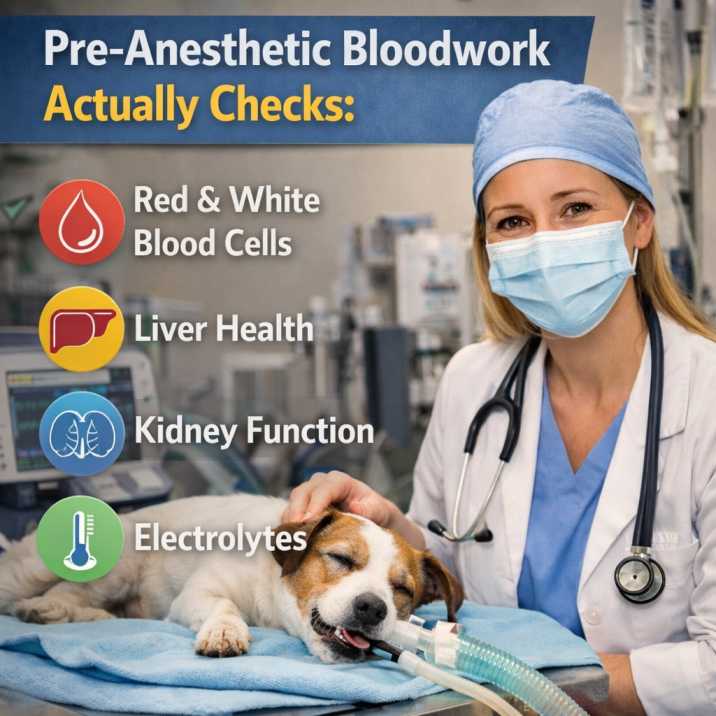
1Complete Blood Count (CBC)Evaluates red blood cells (anaemia check), white blood cells (infection or immune issues), and platelets (clotting ability). Anaemia, for example, significantly affects how well a dog tolerates anesthesia and recovers from the procedure.
-
2Serum Biochemistry PanelChecks kidney function (BUN, creatinine), liver enzymes (ALT, ALP), blood glucose, protein levels, and electrolytes. Kidney and liver function are directly relevant because anesthetic drugs are metabolised and cleared by these organs. Compromised function means drugs stay in the system longer and require dosage adjustment.
-
3UrinalysisConfirms kidney function interpretation from the biochemistry panel and checks for urinary tract infections or glucose in the urine, which can indicate undiagnosed diabetes.
-
4Chest X-Ray (senior dogs / cardiac cases)Evaluates heart size and lung condition. Enlarged heart silhouettes may indicate undiagnosed heart disease. Fluid in the lungs affects how a dog tolerates being intubated and maintained under gas anesthesia.
-
5ECG / Electrocardiogram (where indicated)For dogs with suspected arrhythmias or known cardiac disease, an ECG provides a baseline heart rhythm assessment that guides drug selection and monitoring priorities during the procedure.
-
6Physical ExaminationListening to the heart and lungs, palpating lymph nodes, assessing body condition score, and a full systemic examination. This catches heart murmurs, tracheal abnormalities in small breeds, and general signs of illness that bloodwork may not reveal.
Step-by-Step: What Happens During the Cleaning
Most dog owners feel less anxious about the procedure once they understand what actually happens from the moment their dog arrives at the clinic to the moment they go home. Here is what a comprehensive oral health assessment and treatment (COHAT) involves.
| Stage | What Happens | Why It Matters |
|---|---|---|
| Pre-admission check | Fasting confirmed (8–12 hrs no food). IV catheter placed. Pre-medication sedative administered to reduce anxiety and lower anesthetic drug requirements. | Empty stomach prevents vomiting under anesthesia. IV catheter allows instant drug delivery if needed. |
| Induction | Induction agent given via IV catheter. Dog passes smoothly into unconsciousness. Takes 30–60 seconds. | Rapid induction is safer and less stressful than mask induction. Dog does not experience the transition. |
| Intubation | Endotracheal tube placed into the trachea. Gas anesthesia (isoflurane or sevoflurane) begun. Airway secured. | Prevents water, debris, and bacteria from entering the lungs. Allows precise anesthetic maintenance via gas concentration adjustments. |
| Monitoring setup | Blood pressure cuff attached. Pulse oximeter placed. ECG leads connected. Body temperature monitored. Capnograph measures exhaled CO₂. | Continuous real-time data allows the technician to detect and respond to any change immediately. |
| Full oral exam + X-rays | Every tooth examined. Probing depths measured. Full-mouth dental radiographs taken. Findings recorded tooth by tooth. | 60% of each tooth is below the gumline and invisible without X-rays. Radiographs catch root fractures, bone loss, and abscesses missed by visual exam. |
| Scaling | Ultrasonic scaler removes mineralised tartar above and below the gumline. Hand scalers address difficult areas. | Sub-gingival scaling (below the gumline) is the core therapeutic step that no awake procedure can replicate. |
| Treatment | Any necessary extractions performed under local nerve blocks. Periodontal surgery if indicated. Antibiotics placed directly into deep pockets if present. | Diseased teeth cause chronic pain and harbour bacteria. Extraction under anesthesia allows pain-free treatment with local blocks. |
| Polishing | All scaled tooth surfaces polished with prophy paste. Polishing fills in microscopic grooves left by scaling, making surfaces smoother and harder for plaque to re-attach to. | Without polishing, roughened tooth surfaces re-accumulate plaque faster after cleaning. |
| Recovery | Gas anesthesia discontinued. Dog breathes down on its own. Endotracheal tube removed when swallowing reflex returns. Recovery monitored until standing and responsive. | The recovery period is when most complications, if any, would be detected. Continuous monitoring continues until discharge. |
Total procedure time for a routine cleaning with no extractions is typically 45 minutes to 90 minutes. Dogs with significant disease, multiple extractions, or advanced periodontal surgery may be under anesthesia for two hours or more. Longer anesthesia duration increases monitoring importance but does not dramatically increase risk for otherwise healthy patients.
Senior Dogs and Anesthesia — An Honest Look
The question most commonly asked by dog owners is not about anesthesia in general — it is about anesthesia for their older dog specifically. "My dog is 10 years old. Is it safe to put her under?" This deserves a direct, honest answer rather than a reassuring non-answer.
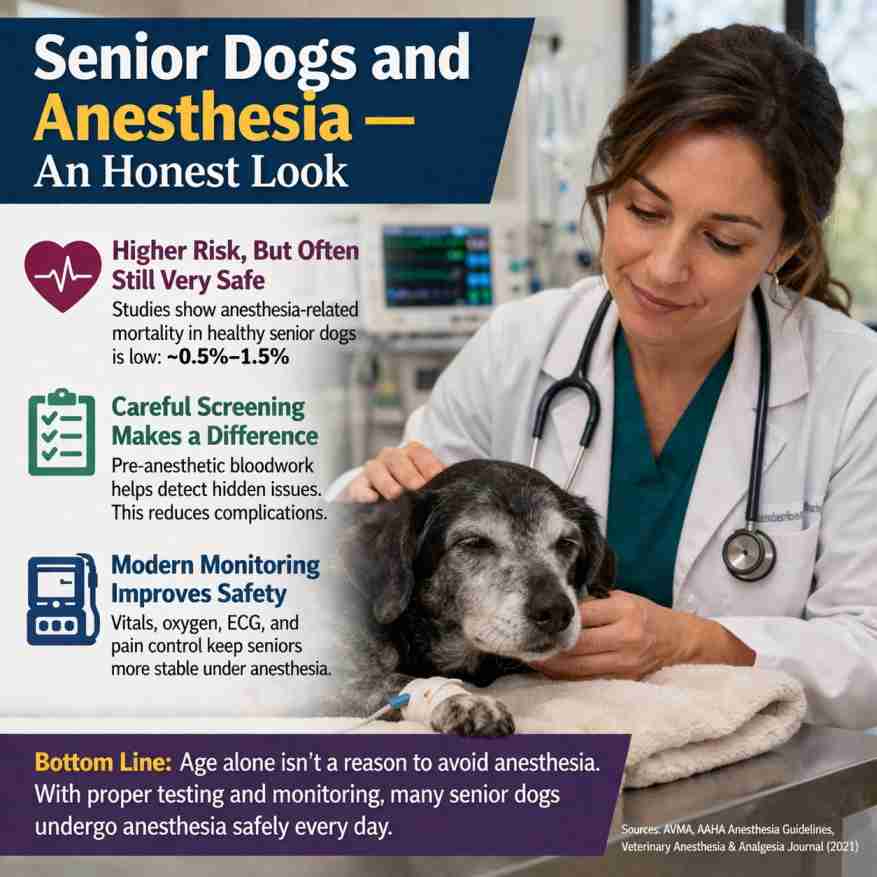
Age is not a disease. Senior status does not disqualify a dog from anesthesia. But age does change how the body processes anesthetic drugs — cardiac and respiratory reserve decreases, kidney clearance slows, and the margin for error narrows. The question is not whether the dog is old — it is whether the dog is healthy enough for the procedure, and that determination requires proper evaluation.
One study published in Veterinary Anaesthesia and Analgesia, tracking over 157,000 dogs across UK primary care practices, found the overall anesthesia-related mortality rate was 0.10–0.14% for all dogs, with higher risk associated with older age. But even for senior dogs, rates in appropriately prepared patients remained well under 2%. The American Kennel Club Canine Health Foundation confirms this: age increases risk incrementally, but does not make anesthesia categorically unsafe.
Why Anesthesia-Free Dental Cleaning Is Not the Safer Option
Anesthesia-free dental cleaning — also called non-anesthetic dentistry (NAD) — is commonly offered at pet stores, grooming salons, and some veterinary clinics. It appeals to owners specifically because it sounds safer: no drugs, no risk. That reasoning is backwards, and every major veterinary organisation agrees.
Here is what anesthesia-free cleaning actually involves: your dog is physically restrained on a table, awake and fully conscious, while a person uses a sharp metal dental scaler to chip tartar off the visible surfaces of their teeth. There is no pain control. There is no sedation. There is no airway protection.
What anesthesia-free cleaning cannot do:
- ✗ Clean below the gumline — where periodontal disease actually lives
- ✗ Take dental radiographs — 60% of each tooth is invisible without them
- ✗ Probe gingival pockets to measure disease progression
- ✗ Detect tooth root abscesses, bone loss, or oral tumours
- ✗ Extract painful, diseased, or fractured teeth
- ✗ Provide pain control during scaling of sensitive gum tissue
- ✗ Protect the airway from debris and fluid aspiration
What anesthesia-free cleaning can do:
- ✓ Remove visible surface tartar from easily accessed teeth
- ✓ Make the teeth look cleaner from a cosmetic standpoint
- ✓ Create a false impression of dental health in the owner's mind
That last point is the most dangerous consequence of anesthesia-free cleaning. A dog whose teeth look clean after a surface scale may continue for months or years with sub-gingival disease progressing undetected. The owner believes the mouth is healthy. The vet may see the clean-looking teeth and defer a professional examination. Meanwhile, bacteria continue to accumulate below the gumline, bone loss advances, and tooth roots become infected. By the time the problem is visible on a surface examination, it is already significantly advanced.
9 Questions to Ask Your Vet Before the Procedure
Going into your dog's dental cleaning appointment prepared makes a real difference — not just for your peace of mind, but for your dog's safety. These are the specific questions that veterinary professionals recommend owners ask, based on guidance from VCA Animal Hospitals, PetMD, and clinical veterinary dental sources.
-
1"What pre-anesthetic testing will you perform?"For any dog over age four, complete bloodwork (CBC, chemistry panel, urinalysis) is standard. Ask specifically — and if it is not offered, request it. Chest X-ray and ECG may be appropriate for older dogs or those with any cardiac or respiratory history.
-
2"Who will be monitoring my dog during the procedure?"A trained veterinary technician should be dedicated to anesthetic monitoring throughout the entire procedure. They should not be simultaneously assisting with instruments. Continuous dedicated monitoring is the safety standard.
-
3"What monitoring equipment will you use?"At minimum: pulse oximeter (blood oxygen), blood pressure monitor, capnograph (exhaled CO₂ — confirms the dog is breathing adequately), ECG (heart rhythm), and body temperature. All five are standard in a properly equipped veterinary dental suite.
-
4"Will my dog receive IV fluids during the procedure?"Intravenous fluids support blood pressure during anesthesia and maintain organ perfusion. This is standard care for any dog undergoing a dental procedure. If IV fluids are not included, ask why and whether they should be given your dog's specific health profile.
-
5"Will dental radiographs (X-rays) be taken?"Full-mouth dental radiographs should be standard practice for a comprehensive dental cleaning. Without X-rays, root fractures, bone loss, abscesses, and retained roots are missed. The AVDC considers dental radiographs essential, not optional.
-
6"What anesthetic protocol will you use for my dog?"The drug combination should be tailored to your dog's weight, breed, age, and health status. Brachycephalic breeds (Bulldogs, Pugs, French Bulldogs) require specific protocols because of their airway anatomy. Senior dogs may need lower drug concentrations with more monitoring.
-
7"Will you contact me if extractions or additional treatments are needed?"You should always be contacted before any extraction or additional procedure is performed, unless you have pre-authorised a specific scope of work. Ask to be notified during the procedure if unexpected findings change the treatment plan.
-
8"What should I do to prepare my dog before the procedure?"Standard instructions include fasting for 8–12 hours (no food after midnight), water typically allowed until 2–4 hours before. Certain medications may need to be withheld on the day. Bring a complete medication list to the appointment.
-
9"What does post-procedure care involve?"Ask about specific feeding instructions for the day of discharge, any medications prescribed (pain relief, antibiotics if extractions were performed), and what signs of complication to monitor for in the first 24–48 hours at home.
What to Expect During Recovery
The recovery period is the phase that most owners find stressful — seeing a normally alert dog groggy and disoriented is genuinely unsettling, even when it is completely expected. Understanding what is normal removes the anxiety from what is simply the body metabolising anesthetic agents.
In the clinic — the first few hours
After gas anesthesia is discontinued, your dog breathes down on their own. The endotracheal tube is removed once the swallowing reflex returns. Most dogs are alert enough to stand within 30–60 minutes of the gas being turned off, though this varies with age and the drugs used. Your dog will be kept warm (hypothermia is a common post-anesthetic complication that is easily prevented), monitored for blood pressure stability, and observed for any signs of complications before discharge. Most dogs are discharged the same day.
At home — 24 to 48 hours
Expect some grogginess, unsteadiness, and quietness for the first several hours after discharge. This is the residual effect of anesthetic drugs being cleared from the system. Most dogs return to their normal behaviour and energy levels within 24 hours. Dogs that had extractions may need soft food for several days and will receive prescribed pain relief and possibly antibiotics.
Home Dental Care to Reduce How Often Cleanings Are Needed
Every professional dental cleaning should be the starting point of a home care routine — not the end of it. A mouth that is professionally cleaned and then maintained daily at home will need far less frequent professional intervention than one that receives no routine care between annual appointments.
The AAHA recommends annual professional cleanings starting at age one for small breeds and age two for large breeds. For dogs receiving consistent daily home care — brushing plus VOHC-approved products — many veterinary dentists report that the interval between necessary cleanings can extend to 18 months or even two years. For dogs with no home care, biannual cleanings are often indicated.
For a complete comparison of home dental care approaches — including when daily chews alone are sufficient versus when brushing is essential — read our full guide: Dental Chews vs Brushing: What Actually Works Better for Dogs? →
If your dog has never had a professional cleaning and you are noticing any of the warning signs — persistent bad breath, yellow or brown tartar, red or swollen gums, reluctance to chew hard food, pawing at the mouth — do not delay a veterinary evaluation. Read our guide on 7 Warning Signs Your Dog Has Dental Disease → before the situation requires more complex and costly intervention.
Frequently Asked Questions
These are the questions dog owners in the US and Europe ask most frequently about dog dental cleaning under anesthesia — drawn from Google and Bing "People Also Ask" and "People Also Search For" data.
Yes — for the vast majority of dogs, it is. The mortality risk for a healthy (ASA Class 1) dog undergoing anesthesia is approximately 0.05%, or 1 in 2,000 procedures. Modern veterinary anesthesia combines pre-anesthetic bloodwork, individualised drug protocols, continuous monitoring by trained technicians, IV fluid support, and endotracheal intubation to manage the airway. Every major veterinary organisation — including the AAHA, AVMA, and AVDC — endorses anesthetic dental cleaning as the standard of care. The risk of leaving significant dental disease untreated is substantially greater than this small procedural risk.
The main anesthesia risks include low blood pressure (managed with IV fluids and continuous monitoring), hypothermia (prevented with warming blankets and fluid warmers), aspiration pneumonia (prevented by endotracheal intubation), allergic or unexpected drug reactions, and in rare cases cardiac events. For healthy dogs (ASA Class 1), the mortality rate is 0.05%. For dogs with pre-existing conditions such as heart disease or kidney disease (ASA Class 2–3), risk ranges from 0.1% to approximately 3%. Pre-anesthetic bloodwork and thorough physical examination identify most elevated-risk factors before the first drug is given.
Age alone does not make a dog a poor anesthesia candidate. Senior dogs can safely undergo dental cleaning with appropriate pre-anesthetic preparation — complete bloodwork, chest X-rays, ECG where indicated, and modified anesthetic protocols as needed. Studies show anesthesia complication rates for senior dogs remain under 2% with proper protocols. The risk-benefit calculation matters: 90% of senior dogs have periodontal disease. Untreated infection in an older dog generates bacterial burden on a heart and kidneys that may already have reduced reserve. The dental disease is doing active daily harm. For dogs aged 10 and over with significant dental disease and concerning bloodwork, a specialist consultation may be appropriate before proceeding.
No. It is not a safe alternative — it is an inadequate cosmetic procedure that creates a false appearance of dental health while leaving real disease untreated. Anesthesia-free cleaning only removes visible surface tartar. It cannot access the sub-gingival space where periodontal disease begins, cannot take dental radiographs, cannot probe gingival pockets, cannot detect abscesses or bone loss, and cannot extract diseased teeth. The AAHA classifies it as "unacceptable and below the standard of care." The AVDC has issued a formal position statement opposing it. The AVMA does not recommend it. The greatest danger of anesthesia-free cleaning is not the procedure itself — it is the false reassurance it provides while real disease continues to progress undetected.
A routine dental cleaning under anesthesia with full-mouth radiographs and no extractions typically takes 45 minutes to 90 minutes. If extractions are needed — which is common, particularly in dogs that have not had recent professional cleanings — the procedure may take 1.5 to 2.5 hours. Dogs are generally recovered and discharged the same day, with most back to their normal behaviour within 24 hours. Post-extraction cases may require soft food for three to seven days and are sent home with pain relief and antibiotics.
In the USA, a routine dog dental cleaning under anesthesia typically costs between $300 and $1,200. The national average is approximately $600–$800 for a standard cleaning with radiographs and no extractions. Extractions add $100–$300 per tooth depending on complexity. Costs vary significantly by geographic region — major cities on the East and West Coasts tend to be at the higher end, while mid-west and rural practices are typically lower. Dental specialist referral practices are priced higher than general veterinary practices. Pet insurance that includes dental coverage can offset costs significantly. From a Rover.com survey (2024), the average cost of a full professional dental cleaning in the US was cited at over $600.
Fast your dog from food for 8–12 hours before the procedure — most vets say nothing after midnight for a morning appointment. Water is typically allowed until 2–4 hours before. Bring a complete list of all current medications, supplements, and any known health conditions to the appointment. Ensure pre-anesthetic bloodwork has been completed in advance. Follow your vet's specific instructions, which may include withholding certain medications on the day of the procedure. Arrive at the scheduled time — delays can affect anesthesia scheduling and monitoring staffing.
The AAHA recommends annual professional dental cleanings starting at age one for small breeds (who have higher disease rates due to crowded dentition) and age two for large breeds. Dogs receiving no home dental care may need biannual cleanings. Dogs with consistent daily brushing plus VOHC-approved products may be able to extend to 18-month or two-year intervals in some cases — but this is a vet-guided decision based on how the individual mouth is responding, not a general rule. Small and brachycephalic breeds (Chihuahuas, Yorkshire Terriers, Shih Tzus, French Bulldogs, Pugs) have the highest disease rates and should begin professional cleaning schedules earliest.