How Dog Dental Disease Affects the Heart, Kidneys and Liver — The Real Science (2026) | PetVitalCare
🔬 Science Deep Dive👨⚕️ Vet Reviewed🇺🇸 USA🇬🇧 EuropeUpdated April 2026
How Dog Dental Disease Affects the Heart, Kidneys and Liver — The Real Science
Most dog owners have heard that bad teeth can hurt the heart. Very few know the specific biological mechanism by which oral bacteria travel through the bloodstream and damage cardiac valves, kidney filtration membranes, and liver tissue. This guide is built on peer-reviewed research — not general claims — and explains exactly what the science shows, what it does not show, and what it means for your dog's daily care. Vet-reviewed. April 2026.
👩
Sarah M.
Founder · PetVitalCare
📅
⏱ 18 min read
👨⚕️ Dr. James R., DVM
🔬 The Research Summary — 2026
A study of 136 dogs found that 50.67% of dogs with periodontal disease had cardiac signs — compared to only 3.28% in the control group without dental disease.
6×
higher endocarditis risk in dogs with severe periodontal disease
Glickman et al., JAVMA 2009 · 59,296 dogs
73%
of dogs with periodontal disease had systemic comorbidities in UK study
Veterinary Sciences, 2019 · 30 dogs
Stage 1
gingivitis already correlated with elevated liver enzyme (ALT) levels
Veterinary Sciences, November 2024
🔍 Find Your Answer
❓Can dog dental disease cause heart disease?
❓Does dog periodontal disease damage the kidneys?
❓How does oral bacteria get into a dog's bloodstream?
❓Dog dental disease liver damage — what the science says
❓Signs that dog dental disease has affected the heart
❓Can cleaning a dog's teeth prevent organ damage?
❓Dog dental disease and kidney failure — is there a link?
❓Periodontal disease dogs systemic effects — research
❓Dog gum disease and heart murmur — connection?
❓How does bacteremia affect dogs with dental disease?
Disclosure: Some links go to product reviews where we earn a small commission. This never changes what we recommend. Full disclosure →
The Biological Mechanism — How Oral Bacteria Reach Your Dog's Organs
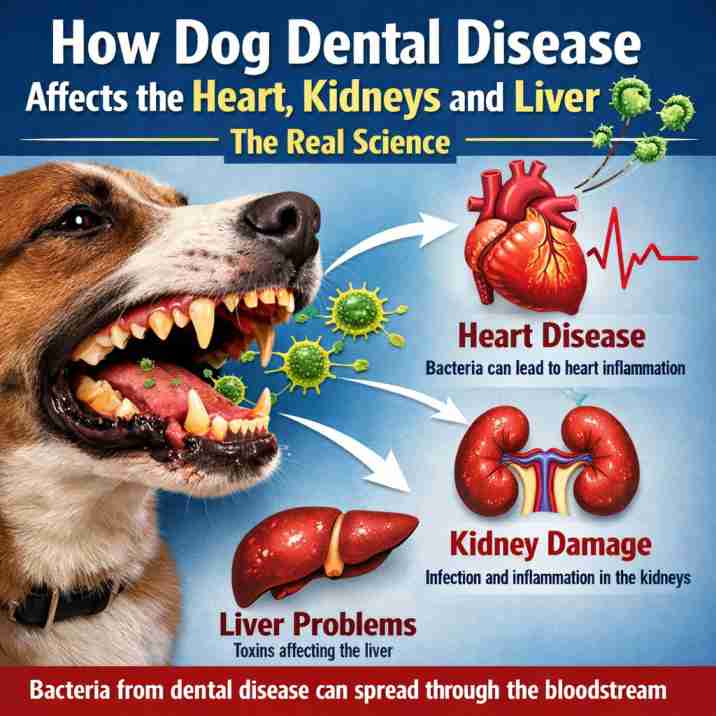
Understanding the pathway from infected gum to damaged heart valve requires understanding one thing first: the gum tissue surrounding a tooth with periodontal disease is not an intact barrier. It is ulcerated, inflamed, and riddled with small tears through which the dense bacterial population of a periodontal pocket has direct access to the capillary network just beneath the surface.
DVM360's February 2026 veterinary review describes the mechanism precisely: "The bacteria in the oral cavity of a pet with periodontal disease can be released into the circulatory system and travel throughout the body." ScienceDirect's peer-reviewed study on 136 dogs confirms that systemic consequences occur secondary to dental plaque-associated bacteraemia, affecting distant tissues and organs. This is not a theoretical risk — it is the documented biological sequence that peer-reviewed research has studied across tens of thousands of dogs.
As gum disease progresses from Stage 1 to Stages 2 and 3, periodontal pockets deepen beneath the gum line. The anaerobic bacteria in these pockets — including Streptococcus, Staphylococcus, Actinobacillus actinomycetemcomitans, and Bartonella species — multiply in the oxygen-poor environment and produce cytokines, endotoxins, and metabolic byproducts.
Oral Disease
🩸
Stage 2 — Inflamed gum tissue provides entry into the bloodstream
The inflamed, ulcerated gum tissue surrounding affected teeth loses its barrier integrity. Every time the dog chews, swallows, grooms, or undergoes any oral manipulation, periodontal bacteria are forced through the damaged tissue wall into the sub-epithelial capillary network and from there into systemic circulation — a process called bacteraemia. This is not a single event; in dogs with active periodontal disease, it occurs repeatedly throughout every day.
Bacterial endotoxins and the body's immune response to persistent bacteraemia trigger systemic inflammatory mediators — cytokines, acute phase proteins, and immune complexes — that circulate throughout the body. Research published in Veterinary Sciences (November 2024) confirms that this systemic inflammatory response is measurable even in dogs with only Stage 1 gingivitis. The persistent, chronic nature of this response is what causes the accumulated organ damage over time.
Systemic Inflammation
💊
Stage 4 — Bacteria reach distant organs through circulation
Circulating bacteria find points of vulnerability in distant organs — damaged or roughened heart valve surfaces, the kidney's glomerular endothelium, and the liver's portal circulation. ScienceDirect's 2019 study confirms that bacteria "have affinity for the kidney endothelium" and that Bacteraemia, endotoxins and cytokines produced during periodontal disease can cause hepatic inflammation. Once bacteria colonise a distant site, they establish local infection that compounds the inflammatory burden on the organ.
Organ Seeding
📉
Stage 5 — Cumulative organ damage over months and years
The organ damage from dental disease is not acute — it accumulates gradually over months and years of repeated bacteraemic episodes. The heart valve thickens and deforms. The kidney's filtration function declines. The liver's enzyme production becomes dysregulated. This slow, progressive timeline is why dogs with Stage 3 or 4 dental disease often show organ biomarker abnormalities on bloodwork — and why the damage can be substantial before clinical signs become obvious.
Cumulative Damage
🔬
The importance of chronic vs acute bacteraemia: A single transient bacteraemia — which occurs even in healthy dogs during normal chewing — is cleared by the immune system without consequence. The clinical problem arises from persistent bacteraemia in dogs with active periodontal disease, where damaged gum tissue continuously releases bacteria into circulation. It is the chronic, repetitive nature of this process — day after day, week after week, in a dog with untreated disease — that allows cumulative damage to accumulate in distant organs.
The Heart — Endocarditis, Valve Damage, and the 6× Risk Finding
❤️
Heart
Bacterial Endocarditis — The Cardiac Mechanism Explained
Evidence level: Confirmed association · Multiple large-scale studies
How Dental Disease Damages the Heart
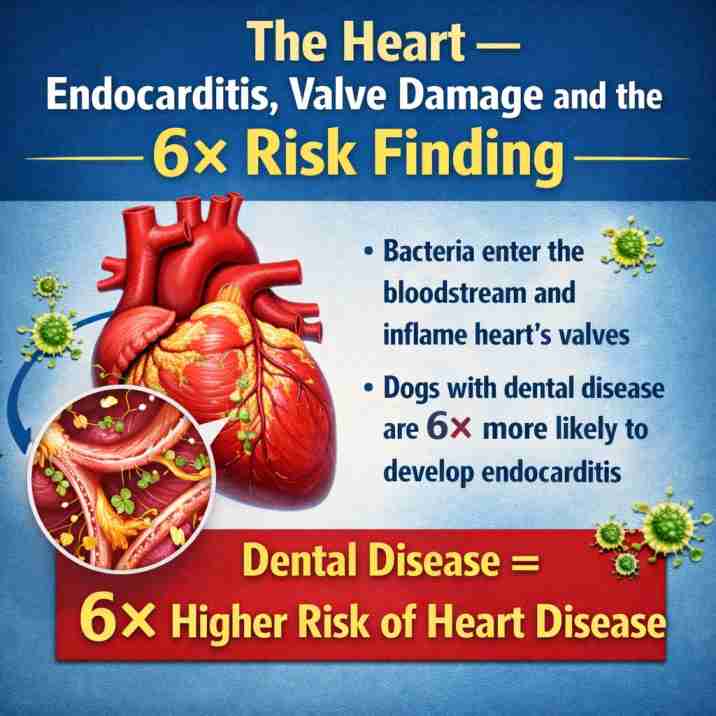
When oral bacteria enter the bloodstream, they travel through the circulatory system until they encounter a site of attachment. The heart valves — particularly the left-sided aortic and mitral valves — are primary targets. ScienceDirect's landmark study confirms the mechanism: "Infective endocarditis can be a result of bacteraemia followed by bacterial attachment to heart valves, with or without valvar dysplasia." NC State University's veterinary cardiology programme confirms that periodontal disease is identified as a frequent source of infective endocarditis in dogs.
Once bacteria adhere to a valve surface, they form vegetative lesions — masses of platelets, fibrin, bacteria, and inflammatory cells. These lesions deform and thicken the valve leaflets, impairing their ability to close properly. This causes blood to leak backward with each heartbeat (regurgitation), progressively straining the heart muscle. In severe cases, the bacterial vegetation can fragment, sending septic emboli through the bloodstream — capable of causing kidney damage, neurological signs, joint inflammation, and multi-organ failure simultaneously.
The bacterial species most commonly isolated from dogs with infective endocarditis — Streptococcus species, Staphylococcus species, Bartonella species, and Actinobacillus actinomycetemcomitans — overlap directly with the oral cavity's normal and abnormal microbiome. This bacterial clonal relationship between oral isolates and heart valve isolates was confirmed in the ScienceDirect study, providing direct molecular evidence of the mouth-to-heart pathway.
The 6× Risk — What the Numbers Show
The most clinically significant finding in this area comes from Glickman et al.'s 2009 study in the Journal of the American Veterinary Medical Association — the largest study of its kind, involving 59,296 dogs with periodontal disease and an age-matched comparison group of 59,296 dogs without it. The study found that dogs with severe periodontal disease had approximately six times the risk of endocarditis compared to dogs without periodontal disease or with only mild disease. A UK veterinary study of periodontal patients found that the most prevalent comorbidities were elevated liver enzymes, heart murmur, mitral valve disease, and endocarditis — with 73 percent of periodontal disease dogs showing at least one systemic comorbidity.
DVM360's February 2026 review confirms: studies have shown a link between bacteraemias originating from oral infections and myocardial infarctions and histological changes in cardiac tissue.
🔬 Key Research Note
Important context from a 2025 veterinary dental review: myxomatous mitral valve degeneration (MMVD) — the most common heart disease in small dogs — is no longer considered to be caused by periodontal disease. Both conditions are common in older small breed dogs, and earlier research conflated the two. The periodontal disease-heart connection relates specifically to infective endocarditis and bacteraemia-driven cardiac damage — not MMVD, which is a degenerative condition with a different aetiology.
Signs of Cardiac Involvement to Watch For
→Heart murmur detected at a routine wellness examination — often the first clinical indicator
→Exercise intolerance — tiring more quickly than usual, reluctance to play or walk normal distances
→Persistent cough — especially at night or after lying down, from fluid accumulating around the lungs
→Rapid breathing at rest — breathing rate over 30 breaths per minute at rest is a veterinary concern
→Intermittent fever and lethargy — in infective endocarditis, fever occurs in 50 to 74% of cases according to MDPI's 2024 systematic review
→Sudden collapse or fainting — in severe endocarditis, cardiac arrhythmia can cause episodic collapse
The Kidneys — Glomerulonephritis and the Filtration Failure Pathway
🫘
Kidneys
Glomerulonephritis, Interstitial Nephritis, and Chronic Kidney Disease
Evidence level: Confirmed association · Glickman 2011 + ScienceDirect 2019
How Dental Disease Damages the Kidneys
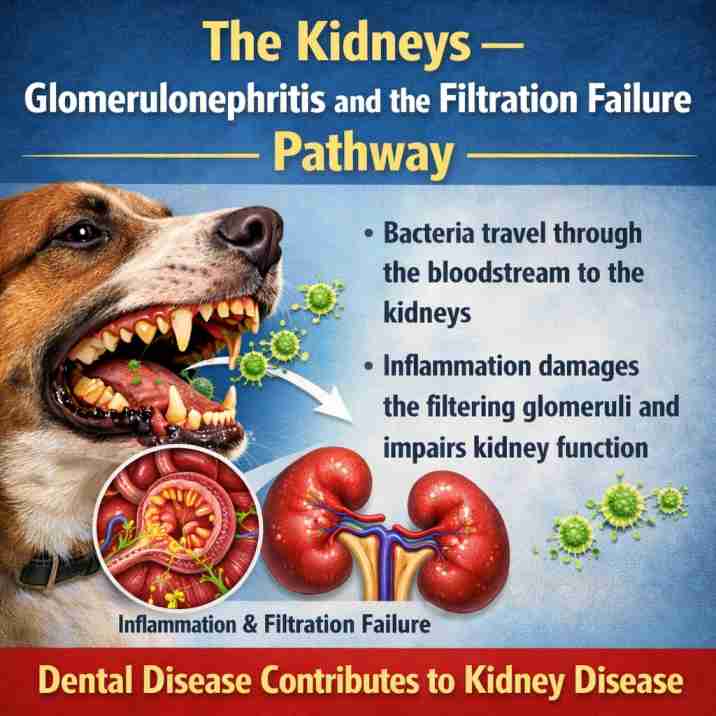
The kidneys are the body's primary blood filtration organs — they process the entire blood volume approximately every 30 minutes. This high-throughput exposure makes them one of the most vulnerable organs to circulating oral bacteria. ScienceDirect's peer-reviewed study identifies three distinct kidney damage pathways from periodontal bacteraemia.
Pathway 1 — Direct endothelial damage: Bacteria from periodontal disease have documented affinity for the kidney endothelium — the specialised lining of the glomerular filtration units. Direct bacterial attachment impairs filtration capacity, reducing the kidney's ability to clear waste products from the blood.
Pathway 2 — Immune complex formation and glomerulonephritis: Circulating periodontal bacteria react with the dog's own immunoglobulins to form immune complexes — antigen-antibody pairs that become lodged in the glomerular filtration apparatus. These deposits trigger an inflammatory response within the glomeruli themselves, causing glomerulonephritis — progressive inflammation and scarring of the kidney's filtration membranes.
Pathway 3 — Pyelonephritis and interstitial nephritis: In more severe cases, bacteraemia can establish active bacterial infection in the kidney tissue itself, causing pyelonephritis (infection of the kidney pelvis) and interstitial nephritis (inflammation of the surrounding kidney tissue). These conditions cause permanent structural damage. ScienceDirect confirms that "in severe cases, this chronic, persistent or repetitive aggression to the kidney may lead to renal failure."
The Glickman 2011 Kidney Findings
Glickman and contributors (2011) described a positive relationship between periodontal disease and azotemic chronic kidney disease in dogs — meaning kidney disease severe enough to cause measurable elevation of blood urea nitrogen and creatinine (the standard kidney function markers on a routine bloodwork panel). Chronic kidney disease is one of the most common causes of death in dogs, particularly in older small breeds — the same population with the highest periodontal disease burden.
Holistic Pet Care NJ (January 2026) summarises the clinical significance directly: "Chronic kidney disease is a common issue in aging pets, but poor dental health can accelerate its progression. Infections and inflammation caused by dental issues can put additional stress on the kidneys, potentially causing irreversible damage."
🔬 Research Limitation Note
The Pereira dos Santos et al. 2019 study of 136 dogs found cardiac disease significantly associated with periodontal disease, but did not find a statistically significant correlation with renal or hepatic disease based on clinical features. The authors noted this was based on clinical presentation rather than histopathology and acknowledged limited sample size and retrospective design as limitations. The Glickman 2011 study — which did find a kidney association — used a much larger dataset. This illustrates why the evidence strength varies between cardiac and renal/hepatic associations.
Signs of Kidney Involvement to Watch For
→Increased thirst and urination — the kidneys lose their concentrating ability early in chronic kidney disease, causing the dog to drink and urinate more
→Weight loss and muscle wasting — kidney disease impairs protein metabolism, causing progressive loss of muscle mass
→Reduced appetite and nausea — build-up of uremic toxins that healthy kidneys would clear causes nausea and appetite loss
→Vomiting — particularly in the morning, associated with uremic gastritis from toxin accumulation
→Pale gums — anaemia from reduced erythropoietin production is common in chronic kidney disease
→Proteinuria on urinalysis — protein in urine is an early marker of glomerular damage, often detectable before creatinine rises on a standard blood panel
The Liver — Hepatic Inflammation and What Elevated ALT Means
🫁
Liver
Hepatic Inflammation, Cholestasis, and Portal Fibrosis
Evidence level: Documented association · Elevated ALT from Stage 1 disease
How Dental Disease Damages the Liver
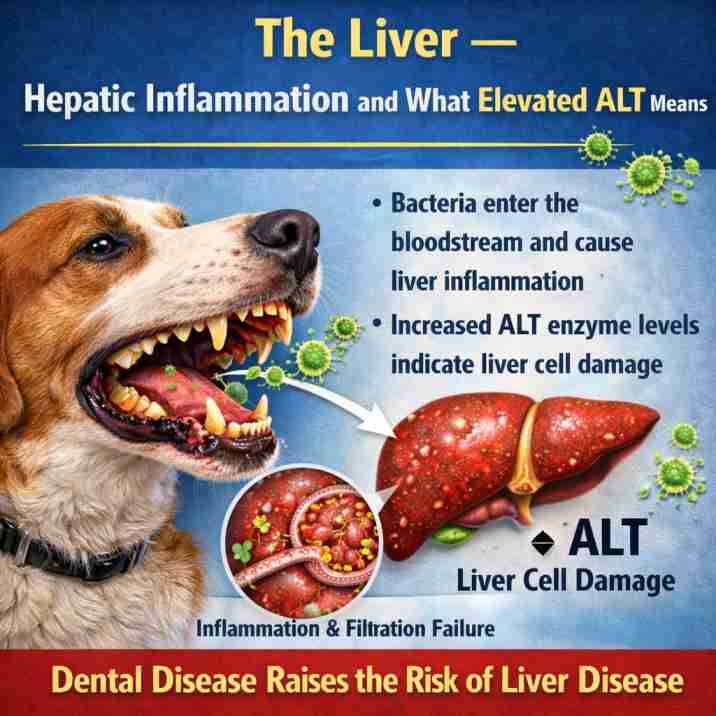
The liver occupies a uniquely exposed position in the body's circulatory system: the portal circulation delivers blood from the digestive tract — and from oral bacteria swallowed during eating — directly to liver tissue before it reaches general circulation. This portal pathway means the liver receives a significant proportion of the oral bacterial load from a dog with periodontal disease, in addition to the systemic bacteraemia route that affects the heart and kidneys.
ScienceDirect's 2019 peer-reviewed study identifies three specific hepatic pathological conditions associated with periodontal disease: intrahepatic cholestasis (obstruction of bile flow within the liver), parenchymal inflammation (active inflammatory damage to liver cells), and portal fibrosis (scarring of the liver's portal circulation). The same study confirms that bacteraemia, endotoxins, and cytokines produced during periodontal disease pathogenesis cause hepatic inflammation leading to an increase of hepatic enzymes.
Barkandwhiskers.com's April 2026 review explains the liver mechanism for general readers: "The liver filters toxins from the blood. When harmful bacteria circulate through the body, the liver needs to work harder to remove them. Over time, chronic infection and inflammation can strain the liver and affect its function."
The Stage 1 ALT Finding — Earlier Than Expected
One of the most significant recent findings in the canine periodontal-systemic disease research comes from a November 2024 study published in Veterinary Sciences. The study found that even at Stage 1 gingivitis — the earliest and only reversible stage of periodontal disease — the degree of dental plaque was already correlated with alterations at liver level through elevated alanine aminotransferase (ALT). ALT is the primary liver enzyme marker on standard veterinary bloodwork panels. Its elevation indicates active hepatocellular damage.
The research states explicitly: "This shows that even at an early stage, the impact of periodontal disease is already significant." This finding challenges the assumption that organ effects only manifest in advanced periodontal disease. It suggests the liver-dental connection begins much earlier in the disease progression than previously documented.
The UK veterinary study of 30 periodontal disease patients found elevated liver enzymes as one of the most prevalent comorbidities — appearing alongside heart murmur, mitral valve disease, and endocarditis in a cohort where 73 percent of dogs had at least one systemic comorbidity.
🔬 Important Context
Elevated ALT alone has many causes — including medications, dietary fat content, and muscle injury. A finding of elevated liver enzymes in a dog with periodontal disease does not confirm periodontal disease as the cause. It creates an association that warrants investigation. VCA Animal Hospitals notes that dogs with liver disease may show visible weight loss or abdominal pain on palpation, and that bloodwork screening including complete blood count and serum biochemistry should be performed to assess liver function markers. Correlation in research populations does not equal causation in an individual dog.
Signs of Liver Involvement to Watch For
→Jaundice — yellow tinge to the whites of the eyes, gums, or skin, indicating bile accumulation from hepatic dysfunction
→Abdominal distension — fluid accumulation in the abdomen from portal hypertension in liver disease
→Vomiting and reduced appetite — hepatic dysfunction impairs digestion and causes nausea across multiple mechanisms
→Abdominal pain on palpation — VCA Animal Hospitals notes dogs with liver disease may show pain when the abdomen is touched by a vet
→Excessive thirst and urination — impaired hepatic hormone processing affects fluid regulation similarly to kidney disease
→Elevated ALT and ALP on bloodwork — the most reliable early indicator, typically identifiable well before clinical signs develop
The Research — What Studies Found and Their Real Limitations
Presenting the research honestly requires presenting both the findings and their limitations. This is the only way to have a genuinely informed view of the mouth-organ connection in dogs.
📚 Key Studies on Canine Periodontal Disease and Systemic Organs
Large-Scale Cohort2009Journal of the American Veterinary Medical Association
Glickman et al. — Endocarditis Risk in 59,296 Dogs
The largest study of its kind found that dogs with severe (Stage 3) periodontal disease had approximately 6 times the risk of endocarditis compared to dogs with no or mild periodontal disease. This study's strength was its enormous sample size and retrospective cohort design. Systemic diseases associated with periodontal disease identified included endocarditis, interstitial nephritis, glomerulonephritis, and hepatitis.
Limitation: The study relied on clinical diagnosis records without standardised periodontal staging or histopathological confirmation of outcomes. Authors noted inability to standardise diagnostic accuracy across practices.
Retrospective Study2019Research in Veterinary Science (ScienceDirect)
Pereira dos Santos et al. — 136 Dogs at Veterinary Teaching Hospital
Of 75 dogs with periodontal disease, 50.67% had cardiac signs — compared to only 3.28% of 61 dogs without periodontal disease. A statistically significant association with cardiac disease was confirmed. No statistical correlation was found with renal or hepatic disease in this cohort (though biological mechanisms for these are documented elsewhere).
Limitation: Small sample size (136 dogs total), retrospective design, limited peridontal staging, and diagnosis based on clinical features rather than histopathology. Authors explicitly noted these limitations.
UK Clinical Audit2019Veterinary Sciences
UK Study — 30 Periodontal Patients Medical History Analysis
73 percent of the 30 periodontal disease dogs had systemic comorbidities. Most prevalent: elevated liver enzymes, heart murmur, mitral valve disease, and monocytosis. Other noted comorbidities included endocarditis, neutrophilia, and arthritis. All three major organ systems — cardiovascular, hepatic, and musculoskeletal — were involved.
Limitation: Very small sample (30 dogs), single veterinary practice, and no control group with standardised staging. Results are hypothesis-generating, not confirmatory.
Haematological Ratios in Canine Periodontal Disease — 80 Dogs
Study of 80 dogs (24 healthy, 26 gingivitis, 30 periodontitis) found that even at Stage 1 gingivitis, dental plaque degree correlated with alterations at platelet level and liver level through elevated ALT. This supports the position that systemic effects begin earlier in the disease process than previously appreciated.
Limitation: Single breed studied (Portuguese Podengo), limiting generalisability. ALT elevation has many causes; confounders not fully excluded.
Text Mining Systematic ReviewJune 2024MDPI Microorganisms
Canine Bacterial Endocarditis — Systematic Literature Analysis
Confirmed periodontal disease as a common source of bacteraemia leading to bacterial endocarditis in dogs. Heart murmur detected in 89 to 96% of dogs with infective endocarditis. Heart failure present in 50% of infective endocarditis cases. Neurological signs in 23% of cases. Kidneys identified as the most common organ to suffer ischemic insult from septic emboli in endocarditis cases.
Systematic review — limited by the quality and design of included primary studies.
What the Science Honestly Shows — And What It Does Not
🔬 An Honest Assessment of the Evidence
The research consistently shows an association between periodontal disease and pathological changes in the heart, kidneys, and liver. The cardiac association — particularly the endocarditis risk — is the most robustly documented, supported by a study of nearly 60,000 dogs. The renal and hepatic associations are supported by mechanistic studies and smaller clinical cohorts.
What the research does not yet establish with certainty is direct, proven causation in every individual dog — meaning a dog with periodontal disease will develop heart or kidney disease because of it. The current evidence shows elevated risk and confirmed biological mechanisms. The association is real, consistent across multiple studies, and mechanistically plausible. But correlation is not causation, and the confounding variables (age, breed, size, overall health) in all these studies make clean causal claims difficult.
A 2025 veterinary dental review makes an important clarification: MMVD (myxomatous mitral valve degeneration) — the most common heart disease in small dogs — is no longer thought to be caused by periodontal disease. Both are common in older small breed dogs. Earlier research may have overstated the heart-dental connection by conflating the two. The connection to infective endocarditis, however, remains well-supported.
The clinical bottom line from all available evidence: periodontal disease is a documented risk factor for cardiac, renal, and hepatic disease in dogs. It is not the only risk factor, it is not inevitable, and treating it does not guarantee organ health. But eliminating a chronic source of bacteraemia and systemic inflammation is a rational, evidence-supported approach to reducing that risk — and one that simultaneously addresses dental pain, tooth loss, and quality of life.
Here is a clear summary of what the research evidence supports for each organ system:
Not confirmed as causing MMVD (the most common heart disease)
❤️ Heart
Myocardial infarction
⚠️ Documented link
DVM360 confirms link between oral bacteraemia and myocardial changes
Mechanism documented; causal studies limited in dogs
🫘 Kidneys
Azotemic chronic kidney disease
✅ Confirmed positive relationship
Glickman et al. 2011 confirmed positive relationship between PD and CKD
Large-scale confirmation needed; confounding with age/breed
🫘 Kidneys
Glomerulonephritis / interstitial nephritis
✅ Mechanistically documented
Bacterial affinity for kidney endothelium confirmed; immune complex formation documented
Clinical correlation in studies variable
🫁 Liver
Elevated ALT (liver enzyme)
✅ Correlated from Stage 1
November 2024 study found ALT elevation correlated with plaque at Stage 1 gingivitis
ALT has multiple causes; single breed study
🫁 Liver
Hepatitis, cholestasis, portal fibrosis
⚠️ Documented association
ScienceDirect 2019 confirms bacteraemia-driven hepatic inflammation; high liver enzymes common comorbidity in UK PD study
Clinical significance in individual patients requires further study
Warning Signs That Organ Involvement May Be Happening
These are the observable signs that your dog's dental disease may have already begun affecting their internal organs. None of these are diagnostic on their own — they are reasons to request bloodwork and a cardiac examination at your next veterinary visit, or sooner if multiple signs are present simultaneously.
❤️
Possible Cardiac Signs
Heart murmur on auscultation
Exercise intolerance or fatigue
Persistent cough (especially at night)
Rapid resting breathing (>30 bpm)
Intermittent fever and lethargy
Sudden collapse or weakness
Joint pain and lameness (from septic emboli)
🫘
Possible Kidney Signs
Increased thirst and urination
Progressive weight loss
Reduced appetite and nausea
Morning vomiting
Pale or anaemic gums
Protein in urine (proteinuria)
General lethargy and weakness
🫁
Possible Liver Signs
Yellow tinge to gums or eye whites
Abdominal swelling or distension
Vomiting and reduced appetite
Abdominal pain on palpation
Elevated ALT/ALP on bloodwork
Excessive thirst and urination
Changes in stool colour (pale or orange)
🚨
If your dog shows multiple signs from any of these columns simultaneously — particularly if they also have known dental disease — contact your vet within 24 to 48 hours for a full wellness examination, complete bloodwork, and cardiac auscultation. Do not attempt to diagnose organ involvement at home. These signs are prompts for veterinary investigation, not self-treatment.
How Dental Care Reduces Systemic Organ Risk — The Prevention Logic
The biological mechanism from the gum to the heart, kidney, and liver flows through one central pathway: persistent bacteraemia from inflamed, ulcerated periodontal tissue. Eliminating the source of that bacteraemia — through consistent plaque control and professional periodontal treatment — is therefore the most evidence-consistent approach to reducing organ risk.
NC State University's veterinary programme confirms this position: "It is postulated that maintaining optimal oral health and hygiene will reduce the prevalence of bacteremia." The AVDC's clinical position is that consistent oral hygiene reduces the ongoing bacteraemic burden that makes organ seeding possible.
1
Daily brushing — interrupting the plaque-to-bacteraemia cycle at the source
Plaque is the foundation of the entire disease mechanism. Without plaque, there is no gingivitis. Without gingivitis, there is no periodontal disease. Without periodontal disease, there is no source of persistent bacteraemia reaching the organs. Daily brushing with VOHC-approved enzymatic toothpaste is the only home care intervention that mechanically removes the bacterial biofilm before it mineralises into tartar and begins the inflammation-bacteraemia cascade. Swedencare USA's April 2026 review confirms that plaque begins mineralising within 24 to 48 hours — making daily brushing the only frequency that reliably interrupts the cycle.
2
Annual professional dental cleaning with full-mouth radiographs
Professional scaling removes sub-gingival tartar and treats periodontal pockets that home care cannot reach — eliminating the primary source of the bacteraemia associated with organ damage in the research. AAHA recommends small breeds begin by age 1 and large breeds by age 2. For dogs with existing dental disease, more frequent cleanings (every 6 months) directly reduce the duration of active bacteraemia between treatments. Full-mouth radiographs are essential — they reveal the sub-gingival disease that a surface examination cannot detect and that is responsible for the most significant bacteraemic burden.
3
VOHC-approved dental chews and water additives — daily bacterial load reduction
VOHC-approved daily dental chews reduce plaque accumulation between brushings through mechanical abrasion and active ingredients. Water additives reduce the oral bacterial count passively around the clock. Neither replaces brushing or professional cleaning, but both reduce the daily bacterial burden in the mouth — reducing the cumulative bacteraemic load over time. This matters because it is the persistent, daily nature of bacteraemia in dogs with dental disease that allows cumulative organ damage to develop.
4
Routine bloodwork at annual wellness visits — early organ detection
Annual bloodwork including complete blood count, serum biochemistry (with liver enzymes ALT and ALP, kidney markers creatinine and BUN, and other organ markers), and urinalysis provides the earliest detectable evidence of organ involvement — often before clinical signs develop. VCA Animal Hospitals confirms that blood tests assess liver and kidney function markers, and that elevations in these values may suggest the presence of disease. For dogs with established periodontal disease, routine bloodwork monitoring is part of responsible overall health management — not just dental afterthought.
5
Inform your vet of dental disease before any medical treatment
Dogs with active periodontal disease who require other medical procedures, medications, or anaesthesia for non-dental reasons have a different risk profile than dogs with healthy mouths. Vets treating dogs for heart disease, kidney disease, or other conditions should know about existing periodontal disease — and vice versa. NC State University's cardiology guidance confirms that for dogs with pre-existing cardiac conditions, periodontal disease is a predisposing factor for endocarditis that should be actively managed. Communication between your vet, any specialists, and the dental health history of your dog is part of comprehensive care.
🛒 Prevention Products — Reducing the Bacteraemia Source
🧴
Virbac C.E.T. Enzymatic Toothpaste — VOHC 2026
VOHC 2026 seal — plaque and tartar. Daily mechanical plaque removal combined with enzymatic bacteria disruption is the only home intervention that directly targets the source of periodontal bacteraemia. The most important product in any dog dental routine for organ protection as well as dental health.
VOHC-approved for plaque and tartar. Reduces daily oral bacterial load between brushings. Available in 5 sizes including teenie and petite for small breeds — the highest-risk group for both periodontal disease and associated systemic complications.
Tasteless, odourless. Neutralises oral bacteria passively every time your dog drinks — reducing the bacterial load available for bacteraemia between every brushing session. 30+ years vet-recommended. Part of the three-tier daily prevention routine.
Yes — peer-reviewed research confirms an association. The landmark Glickman et al. study in the Journal of the American Veterinary Medical Association found that dogs with severe periodontal disease had approximately 6 times the risk of endocarditis compared to dogs without dental disease. NC State University's veterinary cardiology programme identifies periodontal disease as a frequent source of infective endocarditis in dogs. The mechanism is bacteremia: oral bacteria from infected periodontal pockets enter the bloodstream and can adhere to heart valve surfaces. Important note: the most common heart disease in small dogs — myxomatous mitral valve degeneration (MMVD) — is not considered caused by periodontal disease. The confirmed cardiac connection relates specifically to infective endocarditis and bacteremia-driven cardiac damage.
Oral bacteria from periodontal disease enter the bloodstream and reach the kidneys, where they cause damage through three documented pathways. First, bacteria have documented affinity for the kidney endothelium, directly impairing filtration capacity. Second, bacteria react with immunoglobulins to form immune complexes lodged in the glomeruli — causing glomerulonephritis, progressive inflammation and scarring of the kidney's filtration membranes. Third, active bacterial infection can cause pyelonephritis and interstitial nephritis — conditions causing permanent structural kidney damage. The ScienceDirect 2019 peer-reviewed study confirms that in severe cases, chronic bacteraemic episodes can lead to renal failure. Glickman et al. 2011 found a positive relationship between periodontal disease and azotemic chronic kidney disease in dogs.
Yes — documented association exists between periodontal disease and liver changes. ScienceDirect's 2019 peer-reviewed study confirms that bacteraemia, endotoxins, and cytokines from periodontal disease can cause hepatic inflammation leading to elevated liver enzymes, intrahepatic cholestasis, parenchymal inflammation, and portal fibrosis. A November 2024 study in Veterinary Sciences found that even at Stage 1 gingivitis, dental plaque degree was already correlated with elevated ALT (the primary liver enzyme marker on bloodwork). UK veterinary research found elevated liver enzymes among the most prevalent comorbidities in periodontal disease dogs. The liver's direct portal blood supply from the digestive tract means it receives oral bacterial load both through systemic bacteraemia and through swallowed bacteria in portal circulation.
Bacteremia is the presence of bacteria in the bloodstream. In dogs with periodontal disease, the inflamed, ulcerated gum tissue surrounding infected teeth loses its barrier integrity and provides a direct pathway for bacteria to enter the capillary network. Every time a dog chews, swallows, or has oral manipulation, periodontal bacteria are forced through the damaged tissue wall into systemic circulation. A single transient bacteremic episode — which occurs even in healthy dogs — is cleared by the immune system without harm. The clinical problem in dogs with periodontal disease is persistent, repetitive bacteremia occurring daily through continuously ulcerated gum tissue. This chronic bacteremic burden allows cumulative damage to accumulate in distant organs over months and years — which is why the organ effects of dental disease develop slowly and are often detected only on bloodwork.
For cardiac involvement: heart murmur on examination, exercise intolerance, persistent cough, rapid resting breathing, intermittent fever. For kidney involvement: increased thirst and urination, progressive weight loss, reduced appetite, morning vomiting, pale gums, proteinuria on urinalysis. For liver involvement: jaundice (yellow gums or eye whites), abdominal distension, reduced appetite, vomiting, abdominal pain on palpation, elevated ALT/ALP on bloodwork. VCA Animal Hospitals notes that dogs with liver or kidney disease may show visible weight loss or pain when the abdomen is touched. Because these signs develop slowly and dogs hide discomfort, annual bloodwork including complete blood count and serum biochemistry is the most reliable early detection method — often identifying organ changes before clinical signs appear.
Evidence suggests that eliminating the source of chronic bacteraemia through professional dental cleaning and consistent home care reduces the ongoing bacterial and inflammatory stimulus to the heart, kidneys, and liver. NC State University's cardiology guidance states that maintaining optimal oral health will reduce the prevalence of bacteremia. The AVDC position is that consistent dental care reduces the bacteraemic risk that could seed heart valves. This does not mean treating dental disease will reverse established organ damage — it means removing a documented ongoing risk factor for further damage. For dogs with existing cardiac or kidney conditions, the clinical consensus is that periodontal disease management is part of comprehensive whole-body health care, not a separate dental matter.
The Bottom Line — April 2026
The science is clear enough to act on and honest enough to qualify. Periodontal disease in dogs is associated — through documented biological mechanisms — with elevated risk of bacterial endocarditis (6× higher in severe disease), chronic kidney disease, and hepatic inflammation detectable even at Stage 1 gingivitis. The pathway is bacteraemia from infected gum tissue continuously seeding the bloodstream and reaching organs via the circulation.
What the science does not show is guaranteed causation in every individual dog, or that treating dental disease will reverse organ damage already done. What it does show is that eliminating a chronic source of bacteraemia and systemic inflammation reduces ongoing organ risk — and simultaneously eliminates chronic oral pain, tooth loss, and one of the most common preventable health problems in the pet population.
The daily prevention routine — brushing, VOHC chews, water additive — combined with annual professional cleaning and annual bloodwork is not just dental care. It is a documented approach to reducing the risk of heart disease, kidney disease, and liver disease in your dog. Start the routine tonight. Schedule the cleaning if it has been more than 12 months. Ask your vet to include liver and kidney markers in your next bloodwork panel.
Sarah founded PetVitalCare after her dog Max's Stage 3 periodontal disease diagnosis — an experience that prompted deep research into the systemic consequences of dental disease. This article draws on peer-reviewed sources including: Glickman et al. (JAVMA 2009, 59,296 dogs); Pereira dos Santos et al. (ScienceDirect 2019, 136 dogs); UK Periodontal Systemic Disease Study (Veterinary Sciences 2019); Haematological Ratios in Canine PD (Veterinary Sciences, MDPI, November 2024); Canine Bacterial Endocarditis Systematic Review (MDPI Microorganisms, June 2024); NC State University Veterinary Cardiology; DVM360 (February 2026); Swedencare USA (April 2026); Barkandwhiskers.com (April 2026); VCA Animal Hospitals; Holistic Pet Care NJ (January 2026). Reviewed by Dr. James R., DVM. About our team →