📚 All Articles
Sort:
⭐ Featured
Dental Health
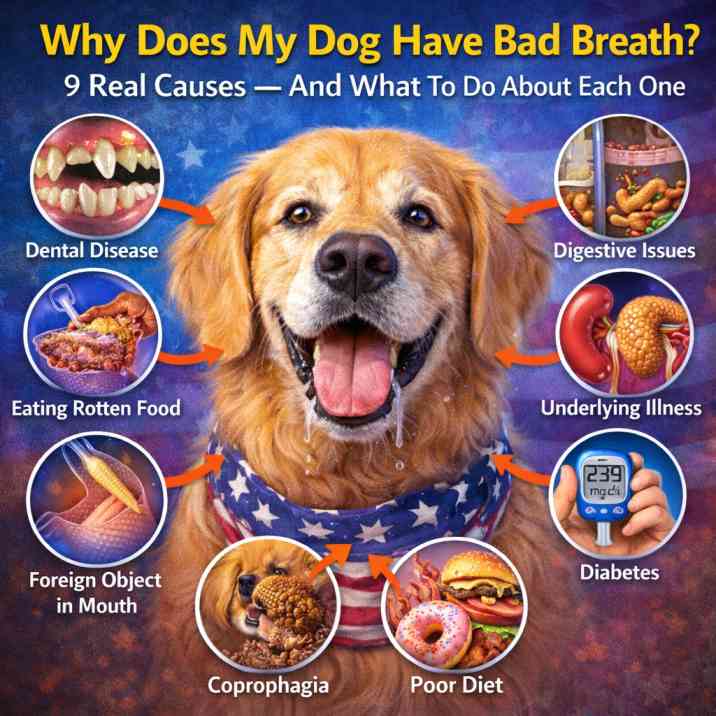
Why Does My Dog Have Bad Breath? 9 Real Causes — And What To Do About Each One
Your dog's bad breath is almost always a symptom of something — ranging from fixable dental plaque to kidney failure. The smell tells you which one it is. This guide covers all nine causes and exactly what to do.
Read Article →
🦷 Dental Health
 ⏱ 11 min
Dental Health
Dog Dental Disease: 7 Warning Signs Every Owner Must Know in 2026
73% of US dogs had dental disease in 2025. Learn the 7 critical warning signs before a $519 vet bill turns into a $2,000 emergency.
⏱ 15 min
Dental Health
Why Does My Dog Have Bad Breath? 9 Real Causes (And What To Do)
Ammonia smell means kidney disease. Sweet smell means diabetes. Learn to identify each cause by smell — and the exact action to take.
🔬
⏱ 9 min
Dental Health
Dog Periodontal Disease Stages 1–4 Explained in Plain English
Stage 1 is reversible. Stage 4 means extractions and bone surgery. Know where your dog stands before the vet appointment — and what to expect.
🦷
⏱ 7 min
Dental Health
Dog Plaque vs Tartar — What's the Difference and Why It Matters
Plaque you can remove at home. Tartar you cannot. Understanding the 24–72 hour window is the single most important fact in dog dental care.
💰
⏱ 8 min
Product Tips
How Much Does a Dog Dental Cleaning Cost in the US in 2026?
$100 for a routine cleaning. $3,000 for advanced Stage 4 disease. Here's exactly what drives the cost — and how to avoid the high end of that range.
🐩
⏱ 10 min
Dental Health
Small Dog Dental Care — Why Chihuahuas and Yorkies Need Extra Attention
Small breeds have periodontal disease at 3x the rate of large breeds. This guide explains why — and the specific routine that makes the biggest difference for toy breeds.
💉
⏱ 12 min
Dental Health
Is Dog Dental Cleaning Under Anesthesia Safe? What Vets Actually Say
The risk of anesthesia is real but small. The risk of untreated dental disease is larger. Here's the honest breakdown every dog owner should read before making this decision.
❤️
⏱ 9 min
Dental Health
How Dog Dental Disease Affects the Heart, Kidneys and Liver — The Real Science
Periodontal bacteria enter the bloodstream and cause measurable organ damage. The AVMA has confirmed the link. Here's what the research actually says.
📖 How-To Guides
🪥
⏱ 9 min
How-To Guide
How to Brush Your Dog's Teeth — The 5-Day Training Plan That Works
Day 1 takes 30 seconds. By Day 5, most dogs accept a full brush. This method works even for dogs who have resisted brushing for years — we tested it.
💧
⏱ 6 min
How-To Guide
How to Use a Dog Dental Water Additive — Common Mistakes to Avoid
Most owners add water additive to a partially-drunk bowl. That's wrong — here's the exact dosing method that keeps it effective throughout the day.
🔦
⏱ 7 min
How-To Guide
How to Check Your Dog's Teeth at Home — What Healthy Gums Look Like
Pale pink and firm — that's the baseline. Learn to identify early gingivitis, tartar buildup, and gum recession before they become expensive problems.
📅
⏱ 8 min
How-To Guide
The Complete Daily Dog Dental Care Routine — Under 5 Minutes
Brushing + chew + water additive, done in 3 minutes flat. The exact routine that our vet advisor recommends — and the order in which to do it matters.
🦴
⏱ 7 min
How-To Guide
How to Choose the Right Dental Chew for Your Dog — Size, Age, Breed
Giving a large-breed chew to a small dog is a choking hazard. Giving a soft chew to an aggressive chewer is pointless. Size matching matters more than brand.
✅
⏱ 6 min
Product Tips
What Is VOHC Approval — And Why You Should Only Buy Dental Products With It
The VOHC seal means a product passed independent clinical trials. Without it, any dental claim is marketing. Here's how to use the VOHC list to shop smarter.
⚖️ Comparisons
⚖️
⏱ 8 min
Comparison
Dental Chews vs Brushing — Which One Actually Works Better?
Both reduce plaque. Neither fully replaces the other. But if you had to choose just one, the research has a clear answer — and it may surprise you.
💧
⏱ 9 min
Comparison
Oxyfresh vs TropiClean Water Additive — Full 2026 Head-to-Head
Both are the top-selling water additives in the US. One is tasteless. One is spearmint. One has a longer track record. Here's which one to buy for your dog.
🦴
⏱ 8 min
Comparison
Greenies vs Whimzees — Which VOHC-Approved Chew Should You Buy?
Both have VOHC approval. Greenies are more palatable. Whimzees are grain-free and vegetable-based. The right choice depends on your dog's sensitivities.
🧴
⏱ 7 min
Comparison
Enzymatic vs Regular Dog Toothpaste — Is the Extra Cost Worth It?
Enzymatic toothpaste continues working after you stop brushing. Regular toothpaste doesn't. Here's the science behind why that matters — and when it's worth paying more.
🛒 Product Tips
⏱
⏱ 5 min
Product Tips
How Long Should a Dental Chew Last? The Answer Changes Everything
A chew that's gone in 30 seconds doesn't clean teeth. A chew that takes 10+ minutes does. Learn the sweet spot — and why your dog's chewing speed matters.
🍗
⏱ 6 min
Product Tips
Which Dog Toothpaste Flavor Do Dogs Accept Most? Real Testing Data
Poultry wins by a wide margin. Mint is the most rejected. Here's what real-world testing data says about dog flavor preferences — and how to introduce any toothpaste.
🪥
⏱ 5 min
Product Tips
When to Replace Your Dog's Toothbrush — And Why Most People Wait Too Long
Every 3–4 months, or when bristles are visibly flattened. Worn bristles lose 40% of cleaning effectiveness. Here's how to remember — and cheaply keep up with it.
⚠️
⏱ 5 min
Dental Health
Why Human Toothpaste Is Dangerous for Dogs — Xylitol and Fluoride Explained
Xylitol can cause hypoglycemia and liver failure in dogs even in small amounts. Most human toothpastes contain it. Here's what to use instead.
🐶 Puppy Care
🐾
⏱ 10 min
Puppy Care
Puppy Dental Care Guide — When to Start and Exactly How to Do It
Start touching the mouth at 6–8 weeks. Introduce a finger brush at 12 weeks. Graduate to a toothbrush at 4–5 months. The timeline matters more than the product.
👃
⏱ 7 min
Puppy Care
Is Puppy Bad Breath Normal? What It Smells Like and When to Worry
Normal puppy breath is sweet and mildly yeasty until about 12 weeks. After that, it should normalize. Here's what the teething smell is about — and when it isn't teething.