Dog Periodontal Disease Stages 1–4 Explained in Plain English
Only Stage 1 is reversible. Most dog owners discover their pet has dental disease at Stage 2, 3, or 4 — when the bone damage is already permanent. This guide explains exactly what happens inside your dog's mouth at every stage, what you will observe at home, what treatment involves, and what it costs in 2026. Read this before your next vet appointment.
What Is Canine Periodontal Disease?
Periodontal disease is an infection and progressive inflammatory destruction of the periodontium — the structures that hold teeth in the jaw. This includes the gingiva (gums), periodontal ligament, cementum, and alveolar bone. According to the Merck Veterinary Manual (© 2026), periodontal disease is caused by plaque bacteria accumulating on the tooth surface and triggering a host inflammatory response that, left uncontrolled, destroys the tooth's supporting architecture.
It is the most common clinical condition in dogs. Over 80 percent of dogs over age three have some degree of active periodontal disease. PawPolicy Advisor cites research showing signs appearing in dogs as young as two. Forever Vets reports that a study of 52 miniature schnauzers found 98 percent developed some level of periodontitis within 30 weeks of stopping toothbrushing.
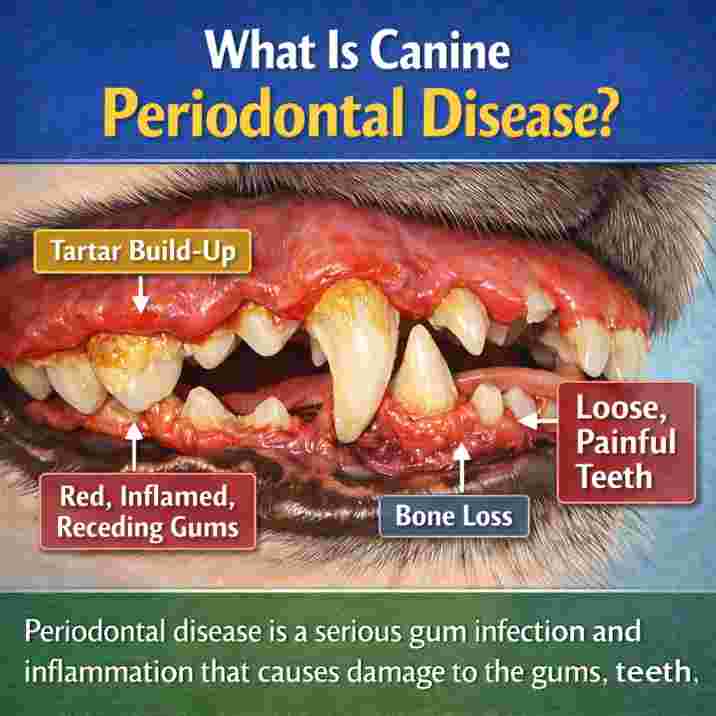
The reason this matters beyond bad breath and yellow teeth: as PetMD confirms, in severe cases the infection does not stay in the mouth. Bacteria enter the bloodstream and can damage the heart, kidneys, liver, and other internal organs. In advanced cases, jaw fractures can occur from severe bone loss. This is not a cosmetic condition — it is a systemic health risk.
The staging fact every owner must know: Periodontal disease staging is based on how much supporting bone has been lost around the affected teeth. Only Stage 1 — where gums are inflamed but bone loss has not yet occurred — is fully reversible. Every subsequent stage causes permanent structural changes. The earlier a dog's disease is identified and treated, the better the outcome and the lower the cost.
How the Disease Progresses — The Biology in Plain Terms
Understanding the progression mechanism helps you understand why consistency in home care matters so much. The sequence is always the same, and it starts within hours of a meal.
Plaque — a soft, sticky biofilm of bacteria — coats every tooth surface within hours of eating. This is normal. The problem begins when plaque is not mechanically removed through brushing. Within 24 to 72 hours, calcium salts from saliva mineralize plaque into tartar (calculus) — a rock-hard deposit that bristles and chews cannot remove once it has hardened.
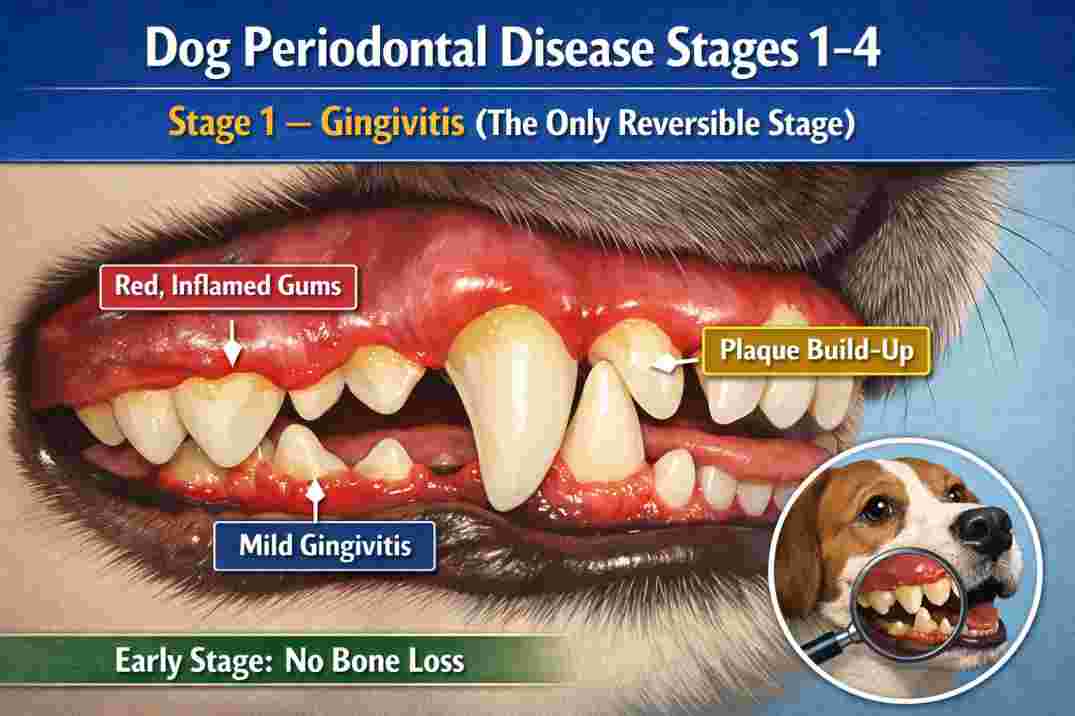
Tartar harbors more bacteria. These bacteria produce toxins that irritate the gum tissue, triggering inflammation — gingivitis. The gums redden, swell, and begin to bleed when touched. At this point — Stage 1 — the underlying bone and ligaments are still intact. Professional cleaning that removes the tartar allows the gum tissue to return to full health.
Without intervention, the bacterial infection deepens below the gum line. The bacteria produce enzymes that break down the periodontal ligament. The dog's own immune response, while attempting to fight the infection, releases compounds that dissolve the alveolar bone. This bone dissolves and does not grow back. This is the critical biological fact behind the staging system: bone loss is permanent. What happens in Stages 2, 3, and 4 cannot be undone — only stopped and managed.
The hidden disease problem: Most periodontal damage happens below the gum line — invisible to the naked eye and to your vet during a routine surface examination. According to the AVDC and confirmed by Southeast Oakville Vet, "bone and roots of the teeth should be covered by gums. If you cannot see the roots or bone, your vet cannot either — so X-rays are needed to see what sort of condition the bone support is in." Dental radiographs under anaesthesia are the only way to accurately stage this disease.
Stage 1 — Gingivitis (The Only Reversible Stage)
Plaque and early tartar have built up along the gum line. The bacteria in this deposit are producing toxins that irritate the gingival tissue, causing the characteristic inflammation of gingivitis. Crucially, at Stage 1 the damage is entirely confined to the soft gum tissue. The alveolar bone, periodontal ligament, and cementum — the structural supports for the tooth — remain completely intact. The tooth is as firmly anchored as it was before disease began. This is the only stage where professional cleaning combined with consistent home care returns the mouth to full health.
- Professional dental cleaning under general anaesthesia — scaling above and below the gum line, followed by polishing
- Full-mouth dental radiographs to confirm no sub-gingival disease
- Begin or recommit to daily brushing with VOHC-approved enzymatic toothpaste
- Add one VOHC-approved dental chew daily and a water additive to every bowl refill
- Schedule the next professional cleaning in 12 months (6 months for small breeds)
Why Stage 1 is so often missed: Dogs at Stage 1 feel no significant discomfort and show no behavioural changes. Owners report "everything is fine" because their dog is eating and playing normally. The only observable signs — mild breath, slight gum redness, early tartar — are easy to normalise or overlook. By the time behaviour changes, the disease has already progressed to Stage 2 or beyond. This is why annual vet dental examinations matter even when a dog "seems fine."
Stage 2 — Early Periodontitis (Permanent Damage Begins)
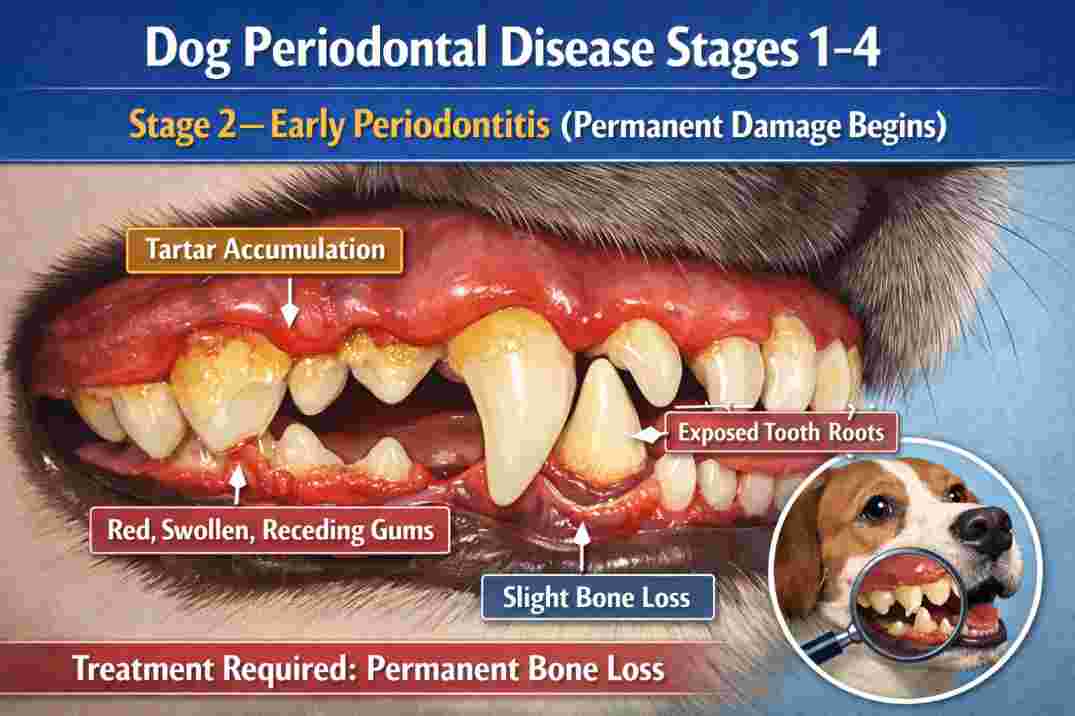
The bacterial infection has now extended below the gum line and begun attacking the periodontium. The alveolar bone surrounding affected teeth shows measurable loss — less than 25 percent at this stage, but real and permanent. Periodontal pockets are beginning to form as the gum attachment pulls away from the tooth root, creating spaces that accumulate more bacteria and accelerate destruction. The tooth begins to lose its structural support. According to Lone Tree Veterinary Medical Center, Stage 2 requires professional intervention to prevent further damage — and that intervention needs to happen promptly, because every week of untreated disease is more bone permanently lost.
- Professional dental cleaning under general anaesthesia — scaling above and below the gum line, root planing to remove infected cementum
- Full-mouth dental radiographs essential — this is the stage where sub-gingival damage is first reliably visible on X-ray
- Specific periodontal pocket treatment based on radiograph findings
- Possible antibiotic therapy if significant infection is present
- Daily home care program must be established immediately post-cleaning
- Follow-up appointment in 2 to 4 weeks to reassess pocket depth
Stage 3 — Moderate Periodontitis (Significant Pain, Specialist May Be Needed)
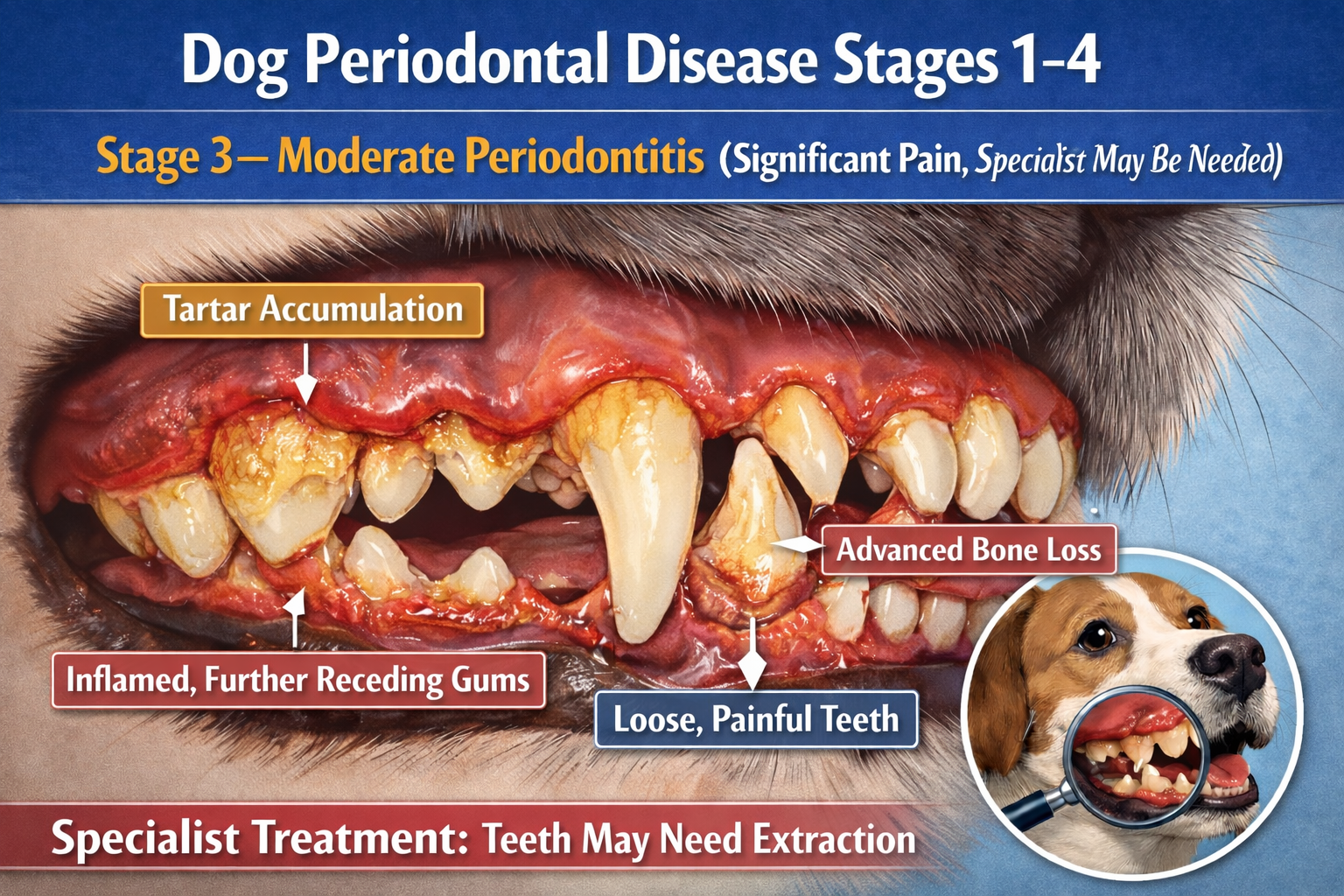
At Stage 3, bone loss has progressed to between 25 and 50 percent of the supporting structure around affected teeth. The infection has extended significantly into the supporting tissues and jawbone. Furcation exposure — the point where multiple roots diverge on multi-rooted teeth — may become visible or detectable on probing, indicating that the bone between root branches has been lost. Periodontal pockets are deeper and more established, creating a self-reinforcing cycle of bacterial accumulation and immune-mediated destruction.
Dogs at Stage 3 are experiencing significant chronic pain. The tooth root surfaces and surrounding inflamed tissue are pain-sensitive structures. The Merck Veterinary Manual and animal dental specialists confirm that dogs at this stage may not yet show the dramatic behavioural changes owners expect — but they are masking discomfort that is real and continuous. According to the AVDC, treatment options at this stage include extraction or advanced treatment by a veterinary dental specialist.
- Comprehensive dental cleaning under general anaesthesia with full-mouth radiographs
- Root planing and subgingival curettage of all affected teeth
- Evaluation of each tooth individually — salvageable teeth receive periodontal therapy, non-salvageable teeth are extracted
- Possible periodontal flap surgery to access and treat deep pockets
- Antibiotic and anti-inflammatory therapy post-procedure
- Pain management medications prescribed for home recovery
- Veterinary dental specialist referral may be recommended for complex cases
- More frequent follow-up — every 3 to 6 months rather than annually
Stage 4 — Advanced Periodontitis (Emergency, Systemic Risk)
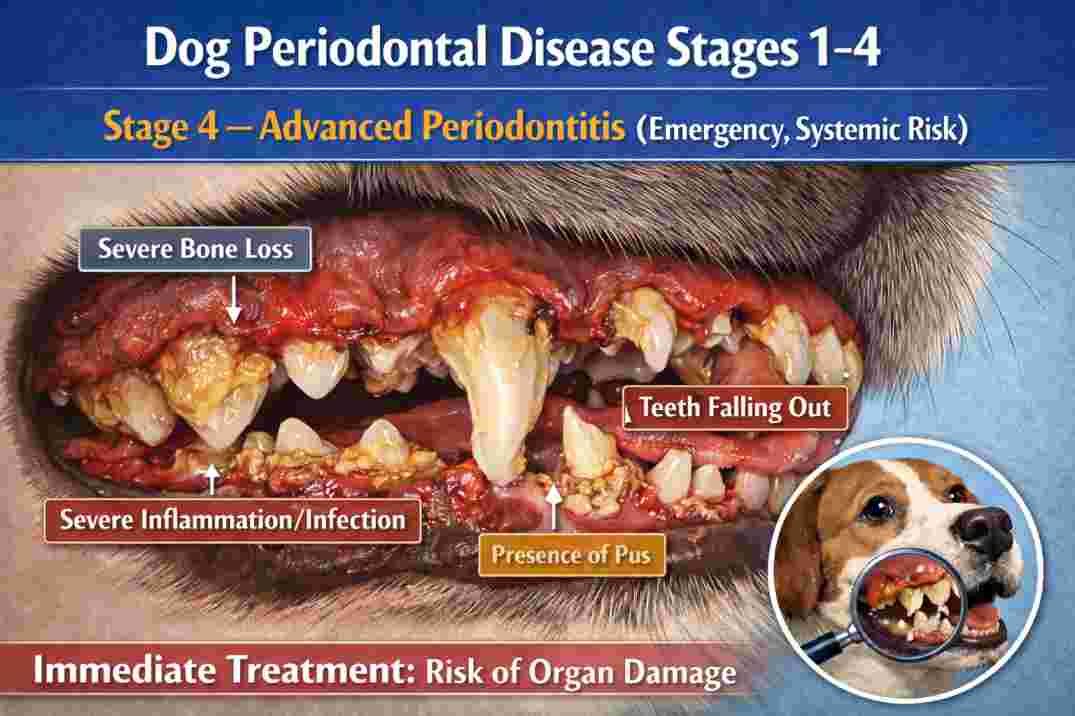
Stage 4 represents more than 50 percent bone loss around affected teeth. At this level of destruction, teeth may be mobile enough to shift position or fall out entirely. The chronic infection has created deep, heavily contaminated periodontal pockets that are reservoirs of pathogenic bacteria. According to Lone Tree Veterinary Medical Center, this stage carries two serious systemic risks: first, bacteria from these pockets can enter the bloodstream and travel to the heart, kidneys, and liver — causing measurable organ damage. Second, the severe bone loss can structurally weaken the jaw to the point where a jaw fracture can occur from normal chewing forces — an extremely painful and surgically complex complication.
Animal Dental Center Arizona confirms that Stage 4 disease "isn't just a dental issue — it's a whole-body health concern." Dogs at this stage are in severe, constant pain despite often appearing to eat and function. The degree to which they mask this pain is a testament to their biological drive to survive, not evidence that they are comfortable.
- Emergency veterinary dental evaluation — this is the stage where waiting is genuinely dangerous
- Pre-surgical bloodwork to evaluate kidney and liver function and confirm anaesthesia safety
- Comprehensive dental procedure under general anaesthesia with full-mouth radiographs
- Extraction of all non-salvageable teeth — typically multiple extractions required
- Aggressive antibiotic therapy before and after surgery to control systemic infection
- Pain management — NSAIDs, opioid analgesics, and local anaesthetic blocks during recovery
- Possible jaw fracture repair if bone loss has led to structural compromise
- Veterinary dental specialist (DAVDC board-certified) strongly recommended for complex Stage 4 cases
- Soft food diet during recovery — may be permanent depending on number of teeth remaining
- Frequent follow-up appointments every 1 to 3 months post-surgery
If you observe any Stage 4 signs in your dog, contact your veterinarian today. Do not give human pain medications — aspirin, ibuprofen, and paracetamol (acetaminophen) are all toxic to dogs and can cause serious harm. If your regular vet cannot see you today, contact an emergency veterinary clinic. Stage 4 periodontal disease is a genuine medical urgency.
Bone Loss — Why X-Rays Are Non-Negotiable
The entire staging system for periodontal disease is based on bone loss percentage — a measurement that is completely invisible without dental radiographs. You cannot see it by looking at the teeth. Your vet cannot see it during a routine awake examination. The roots and surrounding bone are covered by gum tissue and require X-ray to visualise.
The Merck Veterinary Manual confirms that diagnosis of periodontal disease is by means of periodontal probing and dental radiography to assess attachment loss. Animal Dental Care Colorado reports that many veterinary dental specialists now have access to cone beam computed tomography (CBCT) — 3D imaging that provides even greater diagnostic detail than conventional dental radiographs, particularly useful for complex Stage 3 and Stage 4 cases.
A non-anaesthetic dental cleaning — despite being marketed as an alternative — cannot provide staging, cannot include radiographs, cannot safely probe periodontal pockets, and cannot clean below the gum line where the disease actually lives. PetMD, Vetster, and every major veterinary dental authority confirm that non-anaesthetic dental procedures are not recommended and provide a false sense of dental health while the sub-gingival disease continues to advance.
All 4 Stages Compared — 2026 Quick Reference
| Stage | Name | Bone Loss | Reversible? | Key Signs | Treatment Urgency | US Cost 2026 |
|---|---|---|---|---|---|---|
| Stage 1 | Gingivitis | 0% | ✅ Fully | Red gums, mild bad breath, early tartar | Routine — schedule cleaning | $100–$400 |
| Stage 2 | Early Periodontitis | <25% | ⚠️ Not reversible | Worse breath, gum recession begins, tartar heavy | Soon — within weeks | $400–$800 |
| Stage 3 | Moderate Periodontitis | 25–50% | ❌ Stoppable only | Eating changes, pawing mouth, severe breath | Urgent — this week | $800–$1,500 |
| Stage 4 | Advanced Periodontitis | >50% | 🚨 Emergency | Loose/missing teeth, bloody saliva, facial swelling | Emergency — today | $1,500–$3,500+ |
Breeds at Highest Risk — Who Progresses Fastest
Periodontal disease affects all dogs, but certain breeds face significantly higher risk because of jaw anatomy, tooth crowding, and genetic predisposition. Pawlicy Advisor notes that small and brachycephalic breeds are at particular risk, and recommends dental examinations every six months rather than annually for these groups.
For high-risk breed owners: Start brushing at six to eight weeks of age — not when problems appear. Schedule the first professional cleaning at age one, not two. Have dental radiographs taken at every cleaning regardless of how the teeth look on surface examination. These three steps consistently catch disease at Stage 1, when it is still reversible and costs a fraction of later treatment.
Prevention — How to Stop Periodontal Disease Before Stage 1
The four-stage progression described above is not inevitable. It is the result of insufficient plaque control over time. Consistent daily plaque removal keeps the disease from starting. Here is the routine that prevents progression:
Daily brushing with VOHC-approved enzymatic toothpaste — 60 seconds
This is the single most effective preventive action. Daily brushing with Virbac C.E.T. enzymatic toothpaste (VOHC seal 2026, plaque and tartar claim) at a 45-degree angle toward the gum line disrupts the bacterial biofilm before it mineralises into tartar. Focus on upper back teeth — outer (cheek-facing) surfaces accumulate plaque fastest. 30 seconds done every day beats 2 minutes done twice a week by a significant clinical margin.
One VOHC-approved dental chew daily
Give one VOHC-approved chew of the correct size for your dog's weight every day. Greenies Original (VOHC 2026, plaque and tartar), OraVet (VOHC, delmopinol formula), and Whimzees BRUSHZEES (VOHC, grain-free) are the 2026 top picks. Non-VOHC chews have not passed independent clinical trials — their dental claims have no verified evidence behind them.
Water additive in every bowl refill
Add Oxyfresh or a comparable tasteless water additive every time you refill the bowl — one capful per 32oz of fresh water. The active Oxygene technology neutralises odour-causing bacteria every time your dog drinks. This is the zero-effort, zero-resistance tier of the routine that works around the clock between brushings and chews.
Annual professional veterinary dental cleaning
Even the best home routine does not remove all sub-gingival plaque and cannot include dental radiographs. The AAHA recommends professional cleaning annually from age one for small breeds and age two for large breeds, under general anaesthesia with full-mouth radiographs. This is the only way to catch Stage 1 disease and treat it before it becomes permanent.
Monthly at-home mouth inspection
Once a month, in good lighting, gently lift your dog's upper lip and check the gum colour, tartar level, and tooth colour on both sides. Look for any redness, tartar buildup, gum recession, or tooth discolouration. Takes 30 seconds. Document what you see with a photo. Changes between monthly checks are early warning signals — not diagnoses, but prompts to call your vet sooner rather than waiting for the next scheduled wellness visit.
🛒 Vet-Recommended Prevention Products — 2026
Frequently Asked Questions
Stage 1 (Gingivitis): Gum inflammation only, no bone loss — the only fully reversible stage. Professional cleaning plus daily home care returns the mouth to full health. Stage 2 (Early Periodontitis): Less than 25% bone loss around affected teeth — damage is permanent but progression can be stopped with prompt professional treatment. Stage 3 (Moderate Periodontitis): 25 to 50% bone loss, significant chronic pain, possible tooth mobility — advanced professional treatment needed, extractions may be required. Stage 4 (Advanced Periodontitis): More than 50% bone loss, multiple loose or missing teeth, systemic infection risk affecting heart, kidneys, and liver — surgical intervention and multiple extractions typically required, veterinary dental specialist recommended.
Only Stage 1 (gingivitis) is fully reversible. At this stage, the gums are inflamed but the underlying bone and ligament supporting the teeth remain completely intact. Professional cleaning that removes the tartar, combined with daily home care to prevent new plaque, allows the gum tissue to return to full health. Once periodontal disease progresses to Stage 2 and beyond, the bone and periodontal ligament loss is permanent — tissue that has been destroyed cannot regenerate. However, Stages 2, 3, and 4 can all be treated and managed to stop further progression. The goal of later-stage treatment is to halt the disease, eliminate infection, manage pain, and preserve as many teeth as possible.
Stage 4 dog periodontal disease involves more than 50% bone loss visible on dental radiographs. Observable signs include severe gum recession exposing tooth roots, multiple loose or missing adult teeth, bloody or heavily swollen gums, intense persistent bad breath with a putrid quality, significant facial pain, and dramatic changes in eating behaviour. Dogs may refuse hard food, drop food from their mouth, chew only on one side, or lose weight from inability to eat comfortably. In some cases, bacteria from the mouth enters the bloodstream and can damage the heart, kidneys, and liver. In severe bone loss cases, spontaneous jaw fracture from normal chewing forces is possible. This stage requires same-week veterinary attention.
Treatment costs in the US in 2026 depend heavily on disease stage and the number of teeth affected. Stage 1 professional cleaning costs $100 to $400 including anaesthesia and radiographs. Stage 2 treatment including periodontal therapy typically ranges from $400 to $800. Stage 3 treatment including deep scaling, curettage, and possible extractions ranges from $800 to $1,500. Stage 4 advanced treatment involving multiple extractions, possible jaw surgery, antibiotics, pain management, and specialist referral can cost $1,500 to $3,500 or more at US veterinary clinics in 2026. The Pawlicy Advisor notes that anaesthesia alone costs $90 to $1,200 depending on the procedure complexity. Prevention through daily home care costs approximately $40 to $60 per month — a significant fraction of even a Stage 1 cleaning spread across the year.
Dog periodontal disease can progress surprisingly quickly without intervention. A study of 52 miniature schnauzers found 98% developed some level of periodontitis within 30 weeks of stopping toothbrushing. Plaque begins forming within hours of eating and hardens into tartar within 24 to 72 hours. Gingivitis can develop within weeks of consistent plaque accumulation. Progression from Stage 1 to Stage 2 can occur within months without treatment and daily home care. Small breeds typically progress through stages faster than large breeds due to tooth crowding and jaw anatomy. Older dogs progress faster due to accumulated years of exposure. The speed of progression makes annual veterinary dental examinations with radiographs essential — waiting until symptoms appear virtually guarantees the disease has already passed Stage 1.
Dogs have a powerful biological drive to mask pain and continue functioning — an instinct inherited from predator ancestors for whom showing weakness meant vulnerability. A dog with Stage 3 or even Stage 4 periodontal disease will often continue eating, playing, and appearing outwardly normal while experiencing significant chronic oral pain. They adapt — eating more slowly, avoiding the painful side of the mouth, swallowing food with less chewing, preferring softer food — rather than stopping entirely. VCA Animal Hospitals confirms that "few dogs show obvious signs of dental disease" even when the condition is advanced and painful. This is why waiting for your dog to "stop eating" or "show obvious pain" before seeking dental care means waiting until the disease is at its most advanced and expensive to treat.
The Bottom Line — April 2026
The four stages of dog periodontal disease tell one story with a single consistent message: the earlier you act, the better the outcome and the lower the cost. Stage 1 costs $100 to $400 and leaves your dog with a fully healthy mouth. Stage 4 costs $1,500 to $3,500, leaves your dog with permanent bone loss, possibly fewer teeth, and a recovery period — with systemic organ damage as a real risk along the way.
Most dogs are diagnosed at Stage 2 or 3 because Stage 1 produces no dramatic behavioural changes. The red gum line, mild bad breath, and early tartar that signal Stage 1 are easy to normalise. They should not be normalised. They should be the trigger for a veterinary dental examination and radiographs — before the bone loss clock starts ticking.
Start the daily routine tonight. One VOHC chew, one minute of brushing, water additive in the bowl. Schedule the annual professional cleaning if it has been more than 12 months. These three habits are all that stand between Stage 0 and the stage progression described in this guide.